(DISCLAIMER: I am not a doctor, and you should consult your healthcare professional before starting any health regimen.)
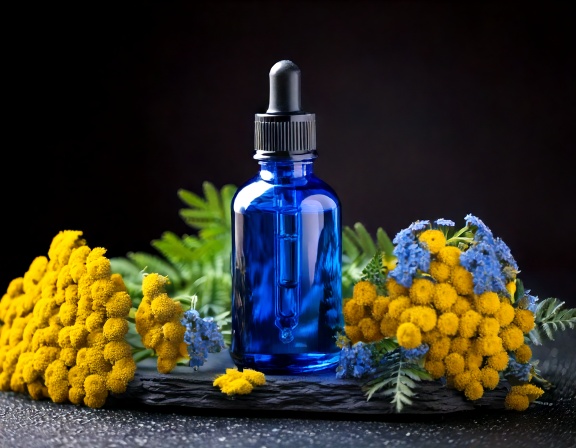
Blue tansy essential oil pairs an ink-blue hue with a soft, herbaceous scent that makes it memorable on an aromatherapist’s shelf. Its main uses are diluted skin-care blends and aromatic rituals, where small quantities bring plenty of character.
The pleasure is in the details: a well-chosen carrier, thoughtful dilution, and aromatic partners that leave room for its herbal sweetness.
The guidance and three simple recipes below offer practical starting points for facial care, after-bath body oil, and diffusion. First, get familiar with the botanical behind that blue bottle.
Key Takeaways
- Look for Tanacetum annuum on the label to identify blue tansy and distinguish it from other botanicals.
- Chamazulene develops during steam distillation and gives the oil its characteristic blue color.
- Begin with low adult topical dilutions, and patch test the finished blend before broader application.
- Pair blue tansy with suitable carriers and complementary aromas, including lavender or frankincense.
- Keep bottles tightly closed, cool, and protected from sunlight to preserve their aromatic character.
Blue Tansy Essential Oil: Benefits and How to Use
Blue tansy has an established place in aromatherapy practice, particularly in skin-care formulations and blends intended for restful personal rituals. Its appeal combines a distinctive scent with the sensory experience of a carefully formulated oil.
For topical use, incorporate it into a carrier rather than applying it directly. A facial blend might contain only blue tansy and jojoba, while a body oil offers room for complementary aromatic notes.
For aromatic use, a small amount adds sweet, herbal depth to a diffuser blend. Start lightly because its scent can become prominent as a blend develops.
Traditional skin-soothing uses belong to aromatherapy practice. Describe their benefits through the finished blend’s feel, aroma, and intended use, keeping medical claims separate.
Your purpose should guide the formula. A bedtime body oil may favor soft lavender notes, while a daytime aromatic blend might pair blue tansy with bright bergamot FCF.
Get to Know Blue Tansy, from Botanical Name to Blue Color
Tanacetum annuum is the botanical to look for
Genuine blue tansy comes from Tanacetum annuum, an aromatic plant associated with Morocco and the western Mediterranean. Suppliers commonly steam-distill its flowering aerial parts.
The botanical name matters because common names overlap. Common tansy is Tanacetum vulgare, a different species with a different chemical profile.
Blue chamomile usually refers to German chamomile, Matricaria recutita, also known as Matricaria chamomilla. Although both oils can have a blue appearance, each brings its own composition and aroma to a formula.
Compare botanical names before comparing bottle sizes or prices.
Why chamazulene gives the oil its deep blue hue
Blue tansy’s flowers are yellow. Its famous blue develops during steam distillation, when heat transforms naturally occurring precursor compounds into chamazulene.
Chamazulene contributes the rich color that often tints the oil a dark, inky blue. Once diluted, that intensity softens according to the concentration and carrier.
However, color depth varies between batches. Growing conditions, processing, and composition all affect the finished oil, so assess color alongside botanical identity and batch information.
Explore Blue Tansy’s Skin-Soothing and Aromatic Benefits
A comforting addition to skin-care blends
Aromatherapists often include blue tansy in formulations intended to give dry-feeling skin a soothing, nurturing experience. Low dilutions suit this role, especially when a blend will cover the face.
The carrier deserves equal attention. Jojoba gives a smooth application, while squalane offers a lighter finish that some users prefer.
Most of the blend’s emollient feel comes from that base. Blue tansy adds its aromatic character, so choose the whole formula around the person’s skin preferences.
For body care, a small amount applied after bathing can turn an ordinary moisturizing step into a pleasant aromatic ritual.
A soft, grounding aroma for personal rituals
Blue tansy’s scent often combines sweet herbal notes with warm, sometimes fruity undertones. Some batches smell brighter; others have a rounded, almost honeyed softness.
That character suits blends intended to create a calm-feeling atmosphere during an evening wind-down or quiet breathing practice.
Lavender can soften the composition, while frankincense adds a resinous note beneath the sweetness. Because scent impressions vary, smell a small trial blend before preparing a larger bottle.
Use Blue Tansy Safely in Skin Care and Aromatherapy
Dilute carefully for face and body
For adult facial use, 1 drop in 1 teaspoon (5 mL) of carrier oil gives approximately a 1% dilution. For a gentler starting point, use 1 drop in 2 teaspoons (10 mL), approximately 0.5%.
Body blends may suit a slightly higher dilution, such as 1% to 2%, depending on the person and purpose. Drop sizes vary, so these figures are approximate. Always dilute before topical application.
Dilution percentages include every essential oil in the formula, rather than blue tansy alone.
Apply the finished blend to a small area of intact skin and wait 24 to 48 hours before broader use. Stop if irritation develops.
Choose compatible carrier oils and aromatic partners
Jojoba and squalane suit facial blends. For body care, sunflower oil or fractionated coconut oil offers an easy-spreading base.
Lavender, frankincense, and bergamot FCF are useful aromatic partners. Choose additions for their contribution to the intended aroma, rather than crowding the formula.
For diffusion, follow the device’s water-fill limits, drop guidance, and operating instructions. Use a ventilated room and begin with a short session.
Store the oil to protect its color and aroma
Keep blue tansy essential oil tightly closed in a cool, dark place, away from sunlight and heat. Follow the supplier’s storage guidance and note the opening date.
Keep essential oils out of children’s reach.
Make Three Easy Blue Tansy Blends at Home
These adult recipes use modest quantities. Dilutions assume approximately 20 drops per milliliter; use precision measurements when a formula requires tighter control.
Soothing Blue Tansy Facial Oil
This simple blend has an approximate 0.5% dilution.
- 1 ounce (30 mL) jojoba oil
- 3 drops blue tansy essential oil
Pour the jojoba into a clean, dry glass bottle with enough room for the essential oil. Add blue tansy, cap, and gently roll between your palms. Label with the ingredients and preparation date. After patch testing, smooth a few drops over clean, slightly damp skin, avoiding the eye area.
Blue Tansy Body Oil for After a Bath
Blue tansy leads this approximately 1% blend, with lavender and frankincense underneath.
- 2 ounces (60 mL) sunflower oil
- 6 drops blue tansy essential oil
- 3 drops lavender essential oil
- 3 drops frankincense essential oil
Combine the ingredients in a clean, dry glass bottle with adequate headspace. Cap and roll gently to mix, then label. After bathing, apply a small amount to damp skin and massage lightly. Allow it to absorb before dressing, especially when wearing pale fabrics. Keep oil away from the bathtub floor.
Calming Blue Tansy Diffuser Blend
Lavender rounds out the herbal sweetness, while frankincense adds depth.
- 1 drop blue tansy essential oil
- 2 drops lavender essential oil
- 1 drop frankincense essential oil
For a water-based diffuser, fill the reservoir according to its instructions. Add the oils only if the device permits this total quantity, then run it according to the manufacturer’s guidance. If a lower amount is recommended, reduce the blend accordingly. Clean the reservoir as directed after use.
Choose and Care for a Quality Blue Tansy Oil
Check the label for identity and sourcing details
Look for Tanacetum annuum, the plant part, and steam distillation as the extraction method. Country of origin and a batch or lot number add useful sourcing detail.
Clear labeling makes comparisons easier, especially when similarly named oils appear together. A batch-specific gas chromatography-mass spectrometry (GC-MS) report provides further information about chemical composition.
Read that report alongside the product’s identity and sourcing details. Together, these give a fuller picture than color or marketing language alone.
Keep the essential oil concentrated and uncontaminated
Choose a tightly sealed, dark glass bottle. Dispense without touching the opening to skin, and add carrier oil only to a separate blending bottle.
Pre-diluted products should identify both the carrier and the essential-oil concentration. Account for that existing dilution when calculating a finished formula.
Keep water out of both the original bottle and homemade oil blends.
Frequently Asked Questions
Will blue tansy stain clothing or linens?
Its blue pigment can mark pale fabrics and porous surfaces. Apply small amounts of a diluted blend, allow time for absorption, and wipe up drips promptly.
Can I add blue tansy to bathwater?
Use a purpose-made bath dispersant and follow its essential-oil dilution directions. Oil and water separate, so direct drops can leave concentrated oil against the skin. The after-bath body recipe offers another way to enjoy its aroma.
How long will a homemade blue tansy facial oil keep?
Its useful life depends on the freshness of every ingredient and how you store the blend. Use the earliest supplier best-before date as your limit, prepare small batches, and discard a blend that develops an altered odor or texture.
What about use during pregnancy or breastfeeding?
Discuss topical and inhalation use with a qualified clinician familiar with essential oils. Choose a formula and dilution suited to your circumstances rather than automatically adopting a general adult recipe.
Bring Blue Tansy Into Your Blending Practice
Blue tansy’s vivid color draws the eye, while its sweet herbal aroma gives it a distinctive place in a blend. In diluted skin care, its appeal belongs to the whole formula, including the carrier and aromatic partners.
Start with one simple recipe and keep dilution central to your choices. Small, thoughtfully prepared batches give you room to discover the combinations that suit your own practice.
Stay Connected for More Natural Living Inspiration
For more wellness tips, subscribe to the blog for weekly posts about essential oils, teas, and herbs. Want an ad free experience with DIY essential oil, herbal recipes and tips? Head here for a distraction free experience.
Thanks for stopping by!

Leave a Reply