
(DISCLAIMER: I am not a doctor, and you should consult your healthcare professional before starting any health regimen. Some links are commissioned and supports the blog)

Key Takeaways
- Comforting mood support: Many people find amber-style aromas help reduce stress and anxiety, making them feel cozy, steady, and less “wired” after a long day.
- A calmer bedtime vibe: Amber blends can support a wind-down routine when used in an aromatherapy diffuser or as a diluted body scent.
- A cozy-smelling home: Amber works well for living rooms, entryways, and wintery “home” energy without lighting a candle.
- Easy to blend: It pairs naturally with woods (cedarwood), citrus (orange), and florals (lavender).
- Skin use depends on ingredients: Some blends are skin-friendly when diluted, others are fragrance oils that don’t belong on skin.
- Quality varies a lot: Because many amber products are blends, two “amber oils” can smell and behave very differently.
- Safety basics still apply: Patch test, dilute well, and be extra careful around kids, pregnancy, asthma, and pets (especially cats).
Amber as a scent feels like a warm knit blanket. It’s sweet, resinous, sometimes a little powdery, often with a soft vanilla-like glow. One breath can make a room feel lived-in and calm, like the lights just got dimmer on their own.
But here’s the twist many people don’t hear until after they’ve bought a bottle: “amber essential oil” usually isn’t a single essential oil. Amber, a fossilized tree resin, isn’t a plant you can steam-distill the way you can lavender or peppermint. Most amber products are blends (also called accords) built to smell like amber, using resins and other aromatic materials.
That matters because the benefits and safety rules depend on what’s inside the blend. In this guide, you’ll learn the real-world ways people use amber blends, what research on aromatherapy can and can’t say, how to use amber oil at home, and how to shop with confidence.
What “amber essential oil” really is, and why the label can be confusing
If you’ve ever searched for amber essential oil benefits, you’ve probably noticed the market feels messy. Some bottles say “essential oil,” others say “fragrance,” and some use vague wording like “amber aroma oil” with no ingredient list.
A true essential oil is typically extracted from a plant (like leaves, flowers, bark, or peel) through distillation or cold pressing. Amber, as we use the word in perfumery, is not one plant source. It’s a scent profile, warm, golden, sweet-resin, sometimes leaning vanilla, sometimes leaning smoky-wood, often functioning as a base note in perfume making.
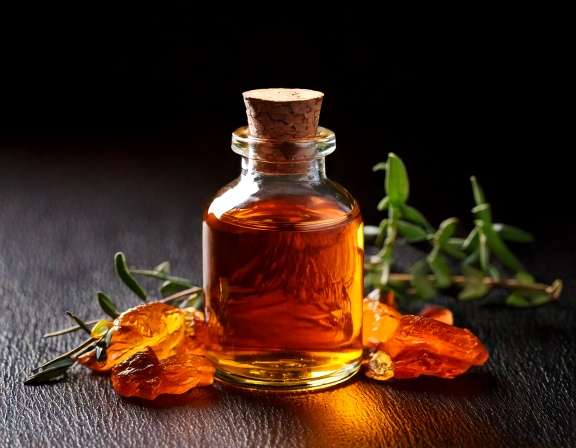
True amber oil differs from plant-based essential oils because it derives from fossilized tree resin of ancient pines like Pinus succinifera, traditionally extracted via the dry distillation process and featuring compounds such as succinic acid, pinene and borneol. So what’s in those “amber” bottles? Often, an amber blend mimics the glow of Baltic amber using resins and rich base notes. You may see ingredients such as benzoin resin (Styrax benzoin), labdanum (from Cistus), copaiba (Copaifera), vanilla oleoresin, and sometimes Peruvian balsam (Myroxylon balsamum). Some blends also include sandalwood-type notes (true sandalwood, or other woods chosen to mimic that creamy depth).
Because formulas vary by brand, the benefits vary too. A benzoin-forward amber can feel soft and cuddly. A labdanum-heavy amber may smell deeper and more incense-like. Add citrus, and it turns brighter. Add woods, and it feels drier and more grounded.
A simple label-reading checklist can save you from surprises:
- Look for a full ingredient list, not just “amber oil.”
- Watch for the words “fragrance,” “parfum,” or “perfume oil” if you want plant-only aromatics.
- If it’s sold as an essential oil blend, check for Latin names (example: Styrax benzoin).
- For essential oils, reputable brands often offer GC/MS reporting (testing that helps verify what’s in the bottle).
- For fragrance blends intended for skin, look for IFRA guidance (usage limits for safety).
- Confirm whether the product is already diluted, and if so, the dilution percentage and carrier used.
Clear labeling isn’t just nice, it’s how you judge what the product can realistically do in your daily routine.
Amber notes vs amber resin vs essential oils: a quick, clear breakdown
“Amber notes” are a scent idea, like “fresh linen” or “vanilla woods.” It describes how something smells, not what it is.
“Amber resin” usually points to resinous materials used to create an amber feel, such as fossilized tree resin from Pinus succinifera or plant-derived options like benzoin or labdanum. These can be essential oils, resinoids, absolutes, or oleoresins, depending on how they’re extracted and sold.
Essential oils are plant-derived volatile oils (like lavender, sweet orange, cedarwood) with well-defined botanical sources and typical extraction methods.
Fragrance oils are manufactured scent blends, sometimes containing natural components, sometimes mostly synthetic, sometimes a mix. They can smell lovely, but their “benefits” are mainly about scent enjoyment and mood cues.
A quick example helps: if a label lists benzoin (Styrax benzoin), it may smell like amber and behave like a resin-rich aromatic in a diffuser (and sometimes in diluted body blends). If it only says “fragrance”, the benefit is mainly that you enjoy the smell, and you should treat it like a perfume product, not a wellness tool.
How the ingredients change the benefits you feel
Amber blends are like chai recipes. Two cups can look similar, but one tastes heavy on cinnamon, another tastes creamy, another tastes sharp with ginger. Your “amber” may be sweet and dessert-like, or earthy and smoky, or soft and powdery.
When a blend leans resinous (benzoin, labdanum, copaiba), many people describe it as grounding and comforting. When it leans vanilla-like, it often feels gentle and cozy. When it leans woody, it can feel steady and quiet.
A few simple blend directions show how this plays out in real life: amber plus lavender often reads as a bedtime scent, amber plus cedarwood can feel rooted and calm, and amber plus orange tends to feel like cozy energy, bright but not sharp. None of these are medical effects, but they can shape how a room feels, and how you feel inside it.
Real-life benefits people use amber blends for (and what evidence supports)
Amber essential oil benefits show up most in everyday moments, not dramatic “before and after” stories. People reach for amber blends when they want their home to feel softer, or when they want their nervous system to stop buzzing after a long day.
Aromatherapy research, in general, suggests that scent can influence stress perception, mood, sleep routines, stress and anxiety, and mental health, mostly through how the brain processes smell and memory. That’s not the same as a cure or treatment. Think of scent as a setting, like lowering the lights or putting on quiet music. The setting can help your body get the message that it’s safe to relax, while promoting benefits like immune system support and better blood circulation.
If you enjoy diffuser routines, you might also like the ideas in powerful diffuser blends for allergies and immunity, which shows how different oil families shape the feel of a space.
A calmer mood and a grounded feeling after a long day
Warm, sweet-resin scents can act like a soft signal to the brain. Not an order, more like a suggestion: slow down, you’re home. Many people find amber blends helpful when the day has been loud, busy, or emotionally crowded. These amber essential oil benefits extend to everyday unwinding.
This is where amber shines: after work while changing into comfortable clothes, during journaling, while cooking something simple, or while stretching on the living room floor. The scent doesn’t fix your schedule, but it can make your evening feel less jagged around the edges.
Scent is personal, though. If amber reminds you of a bad headache from a strong perfume, your body may tense instead of relax. Start light, then decide.
A softer bedtime routine that feels steady, not sleepy-heavy
Some bedtime scents feel like they knock you out. Amber is different for many people. It can feel steady, like a slow exhale, especially when paired with familiar sleep cues.
An easy wind-down might look like this: you dim the lights, set the diffuser for a short run, take a warm shower, then put on lotion with a very low dilution of your amber blend (if it’s skin-safe). The room smells like warmth instead of “cleaning product,” and your brain starts linking that scent with rest.
It’s important to keep expectations realistic. Amber blends can support relaxation habits, but they don’t treat insomnia. If sleep is a persistent struggle, it’s worth talking with a healthcare professional while you also build gentler nighttime routines.
A home that smells clean, cozy, and welcoming without candles
Not everyone wants candles burning, especially with kids, pets, or a small space. Amber blends are popular for diffusers and simple room sprays because the scent tends to feel “finished,” like the base note in a perfume that makes everything else smell smoother.
Amber works especially well in living rooms and entryways, where you want comfort without anything too floral. It’s also a classic fall and winter scent, but it can work year-round if you keep it light.
If amber gets too strong, the fix is simple: run the diffuser for shorter bursts, use fewer drops, and ventilate the room. Most people go nose-blind faster than they expect, and adding more drops usually makes the air feel heavy rather than cozy.
Skin and body perks people look for, plus the limits
A lot of “amber oil” products are sold as body scents, not skincare. That’s fine, as long as you treat them like perfume and follow the label.
If an amber blend contains resins such as benzoin, some people find it feels soothing in a carrier oil due to its anti-inflammatory properties, especially when massaged into shoulders or used as a personal scent on pulse points.
Resinous materials have long been valued for wound healing and antibacterial activity, and they offer antioxidant protection against free radicals. For topical application as part of your skin care routine, consistent use may help maintain skin elasticity and provide anti-aging effects, thanks to additional anti-inflammatory properties.
Still, resinous materials can irritate sensitive skin, and certain ingredients are more likely to cause reactions. This is where the label matters most. A fragrance oil may not be meant for leave-on skin, and some blends include components that have specific usage limits. Always dilute, patch test, avoid eyes and sensitive areas, and don’t apply to broken skin. Adding amber to your skin care routine can be a gentle enhancement, but if you’re building a broader home kit, top essential oils for first aid kit is a helpful reminder that “natural” still requires careful handling.
How to use amber oil safely at home (diffuser, roller, and DIY ideas)
Because amber products vary, always start with the directions on your specific bottle to unlock amber essential oil benefits. Then keep your use simple and low-risk for maximum amber essential oil benefits.
For aromatherapy diffusers, many adults do well with a small number of drops and short sessions. In a standard water-based aromatherapy diffuser, that might mean starting with 3 to 5 drops total, then adjusting next time. If the scent feels cloying or gives you a headache, use fewer drops and air the room out to support your respiratory system.
For skin use, dilution with a carrier oil matters. A common range for adults is 1 to 2 percent for leave-on body products (about 6 to 12 drops of essential oil per 1 ounce, or 30 ml, of carrier oil). For the face, many people stay at 0.25 to 1 percent with a carrier oil, and some need even less. If your amber is a fragrance blend, don’t assume it follows essential oil dilution logic. Follow the label’s skin guidance and IFRA limits if provided.
Three easy DIY uses, kept simple
You can make a roller for topical application by mixing your skin-safe amber blend into jojoba carrier oil at a low dilution, then apply lightly to wrists for relief from muscle aches and pains. You can make a room spray by combining distilled water, a small amount of alcohol or solubilizer (if you use one), and a few drops of amber blend, then shake well before each use. You can scent an unscented lotion by adding a very small amount of a skin-safe blend to your carrier oil base, mixing thoroughly for your skin care routine, then patch testing before regular use to enhance your skin care routine.
Extra caution matters for certain households. Kids have smaller bodies and stronger responses, so use fewer drops and diffuse for short times. If you’re pregnant, nursing, managing asthma, or prone to migraines, go low and slow, and check with a clinician if you’re unsure. With pets, be careful with any diffuser use, keep the room ventilated, and always let animals leave the space. Cats are especially sensitive because their bodies process some aromatic compounds differently.
Simple blends that smell amazing, even if you’re new to essential oils
These are diffuser-friendly ideas for a standard session in a medium room, ideal for meditation and relaxation or daily wellness routines that promote immune system support and blood circulation. Adjust for your space, and crack a window if the scent builds up.
Calming amber night vibe: 2 drops amber blend (essential oil blend), 2 drops lavender, 1 drop cedarwood. This smells like warm sheets and quiet wood, highlighting its aphrodisiac properties in a romantic setting and perfect for meditation and relaxation.
Uplifting cozy energy: 2 drops amber blend, 3 drops sweet orange, 1 drop frankincense. It’s bright, but still soft around the edges.
Earthy grounding mix: 2 drops amber blend, 2 drops cedarwood, 1 drop copaiba (or vetiver if you love deep notes). This one feels like a slow walk in a dry forest, tapping into its spiritual virtues for solar plexus chakra balance.
Regular use of these blends can help manage stress and anxiety while supporting mental health. If you want more ideas for scenting a space with purpose, essential oils for seasonal allergies also includes safe-use reminders that apply to any diffuser routine, even when your goal is simply a cozy home.
Shopping tips: how to choose a quality amber product you can trust
Amber can be gorgeous, but it’s one of the easiest labels to hide behind. Shopping smart is less about hype and more about transparency.
Start with the basics: a trustworthy product tells you exactly what it is. Look for a complete ingredient list, clear use directions, and whether it’s an essential oil blend or a fragrance oil. Batch information and a real company address are also good signs.
A few red flags are worth taking seriously. If there’s no ingredient list, you can’t know how to use it safely, especially for topical application. If you see big claims paired with zero details (like “therapeutic grade” without sourcing or testing info), treat it as marketing, not proof. Also skip brands that push ingestion, especially for vague “amber oils.” Unless you’re under guidance from a qualified clinician trained in essential oils, internal use is an avoidable risk.
When trying a new amber, start small. Test the scent on a paper blotter or cotton pad first. Wear it diluted once before committing to daily use. The right amber should feel comforting, not loud.
Conclusion
Amber essential oil benefits aren’t one fixed list, because “amber essential oil” often means a blend inspired by fossilized tree resin. What you feel depends on what’s inside the bottle, and how you use it. Still, many people reach for amber scents to enhance their skin care routine with anti-inflammatory properties and antioxidant protection against free radicals, or to leverage its antibacterial activity for better skin elasticity and anti-aging effects. Others turn to it for respiratory system support, meditation and relaxation, perfume making, or dilution with a carrier oil.
These amber essential oil benefits create a calmer mood after a long day, a softer bedtime atmosphere, and a home that smells cozy and welcoming.
Keep it simple and safe. Read labels, choose transparent brands, stick to low dilutions, and patch test before putting any blend on your skin. Let amber be a support for your routines, not a promise in a bottle.
If you use amber blends already, what notes do you love most, vanilla warmth, resin depth, or that quiet hint of wood?
Stay Connected for More Natural Living Inspiration
If you enjoyed this post about herbal wellness and love discovering natural ways to refresh your home and wellness, don’t miss out on future recipes and clean-living tips! Subscribe to the blog for weekly DIYs, wellness inspiration, and herbal remedies delivered straight to your inbox.
Don’t forget to visit my Amazon storefront for the links to my favorite essential oils, herbal teas, and natural recipes. I also create YouTube ambiance videos for sleeping; a channel I created to help people who have trouble sleeping. The link to all social media content is here.
Thanks for coming by!
Leave a Reply