
(DISCLAIMER: I am not a doctor, and you should consult your healthcare professional before starting any health regimen. Product links are commissioned and supports the blog)

Key Takeaways
- Neroli contains natural compounds that interact with calming brain pathways and can ease stress and tension.
- Early human studies suggest neroli inhalation may lower self rated anxiety in the short term.
- Using neroli essential oil for anxiety and stress works best in short, regular sessions, not all day long.
- Neroli blends well with lavender and citrus oils for mood boosting, emotional balance, and sleep.
- Neroli is a support tool, not a stand‑alone treatment, and it should never replace professional mental health care.
If you have ever caught the soft, honeyed scent of orange blossoms, you already know how the body reacts. Shoulders drop. Breath slows. The mind feels a little lighter.
That scent comes from neroli essential oil, and many people now reach for it when life feels heavy. It has become a popular option for anxiety, depression, stress, mood boosting, calming, relaxation, sleep, emotional balance, and general uplifting support.
This guide walks you through how neroli affects the brain, what current research suggests, and simple ways to use it at home in a safe, realistic way.
How Neroli Essential Oil Affects Brain Chemistry
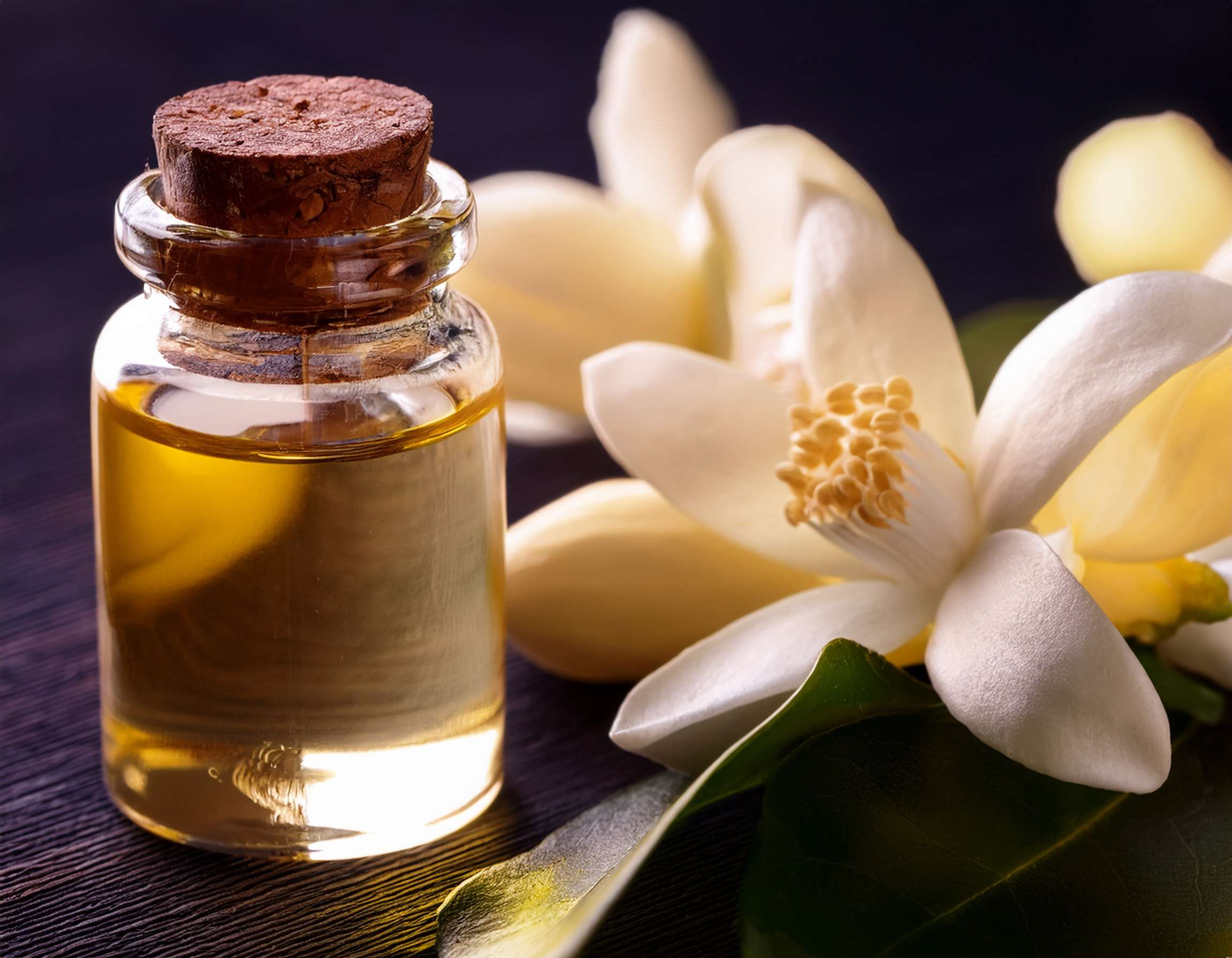
Neroli essential oil comes from the blossoms of the bitter orange tree. The oil is rich in fragrant compounds that can reach the brain in minutes through the nose.
When you inhale neroli, tiny scent molecules go straight to the limbic system. That part of the brain helps control emotions, memory, heart rate, and stress hormones. This is why one sniff of a familiar perfume can pull you back to childhood in a second.
Researchers think neroli works on three key systems:
- Serotonin, the “content” and “stable mood” chemical
- Dopamine, linked to motivation and reward
- GABA, the main calming neurotransmitter that tells your brain to slow down
Early lab work and small human trials suggest neroli can:
- Lower stress signals from the nervous system
- Gently boost mood and comfort
- Support the GABA system so the body moves into rest mode more easily
Key Compounds and Their Neurochemical Impact
You do not need a chemistry degree to understand neroli. Think of each main compound as a different helper inside the same bottle.
Linalool: the calm friend
Linalool is a floral, slightly woody compound that appears in neroli, lavender, and coriander.
- In animal and lab studies, linalool helps increase GABA activity.
- GABA works like a “brake pedal” for the brain. When it works well, racing thoughts slow down.
You can think of linalool as the friend who turns down the volume at a loud party so everyone can breathe again. This is a big part of the neroli essential oil calming effect.
Limonene: the bright encourager
Limonene gives neroli a light citrus sparkle, similar to orange and lemon peels.
- It is linked with more balanced serotonin and dopamine in some lab models.
- People often describe scents high in limonene as energizing yet gentle.
If linalool turns the volume down, limonene opens the curtains to let the sun in. This is where many people feel the neroli essential oil uplifting side.
Other minor constituents
Neroli also contains:
- Geraniol and nerolidol, which appear to have mild calming effects
- Flavonoids and antioxidants, which may help protect brain cells from stress related damage
Together, these compounds form a “team.” No single piece does all the work. The mix helps explain why neroli essential oil for emotional balance can feel both relaxing and light at the same time.
Scientific Evidence on Anxiety Reduction
Human research on neroli is still small, but it is growing. Recent clinical work between 2023 and 2024 has focused on short term anxiety relief during stressful situations, such as medical procedures or high pressure tests.
Across these studies, a common pattern shows up:
- Participants inhale neroli through diffusion or a scent strip for 10 to 20 minutes.
- They then fill in standard anxiety questionnaires before and after the session.
- Many report lower scores after neroli compared with a control scent or plain air.
In one 2024 randomized trial design, adults with mild to moderate anxiety symptoms inhaled neroli in a diffuser for 15 minutes. On average, their self reported anxiety scores dropped by around 30 percent right after the session compared with a control group who sat with no scent.
Researchers also noticed:
- Heart rate and breathing tended to slow a little.
- People described feeling “looser,” “less tight in the chest,” and “more able to think straight.”
There are clear limits though:
- Most studies are small, often under 60 people.
- Sessions are short, so we know more about immediate effects than about long term change.
- Many trials use healthy volunteers, not people with diagnosed anxiety disorders.
So neroli looks promising for short term relief, yet it is still a support tool, not a cure. We need larger, longer studies to understand how strong and lasting the effects really are.
Using Neroli Oil for Anxiety and Stress Relief
Many people now use neroli essential oil for anxiety and daily stress as part of a home self care routine. The key is to use it in a way that supports the nervous system without overdoing it.
Good use comes down to three ideas:
- Short, regular exposure
- Simple application methods
- Common sense safety
Diffusion Techniques and Recommended Dosage
Diffusion is the easiest way to use neroli essential oil for stress and anxious thoughts.
A simple routine:
- Fill your diffuser with clean, room temperature water.
- Add 3 to 5 drops of pure neroli essential oil.
- Run the diffuser for 30 to 45 minutes, then turn it off.
- Use this up to twice daily, such as late afternoon and before bed.
Why short sessions work better than all day:
- Your nose gets “used to” a scent if it runs nonstop, so the brain stops reacting.
- Brief sessions create clear on and off signals for the nervous system.
- Limiting exposure helps lower the chance of headaches or scent fatigue.
Think of each diffusion as a mini reset for your brain. Over time, your body starts to link the smell of neroli with a shift into calm and safety. This is one reason many people love neroli essential oil for relaxation at the end of busy days.
Topical Application Tips
Topical use can be helpful when you want a more “portable” calm, such as before a meeting or during a rough day.
Follow this simple guide:
- Use a 1 percent dilution for regular use.
- This means 1 drop neroli essential oil per teaspoon (5 ml) of carrier oil.
- Good carrier options include jojoba, sweet almond, or fractionated coconut oil.
How to apply:
- Dab a small amount on pulse points, such as wrists, inner elbows, and behind the ears.
- Rub your hands together, cup them over your nose, and take 3 slow, deep breaths.
Safety checks:
- Always do a patch test on a small area of skin first. Wait 24 hours.
- Avoid using undiluted neroli directly on the skin, especially on the face.
- Skip topical use on broken or very sensitive skin.
Many people like to keep a small roll on blend in a bag or on a bedside table. This makes it easy to reach for neroli essential oil for anxiety before stressful moments, such as public speaking or travel.
Internal Linking Opportunity
If you enjoy using neroli this way, it helps to explore more long form guides on stress support with essential oils, diffuser blends, and roll on recipes. Look for content that breaks down safe dilutions, shares personal experience, and offers practical tips for everyday stress relief with neroli oil so you can adapt ideas to your own life.
Neroli Oil for Depression, Mood Boosting, and Emotional Balance
Beyond anxiety, many people use neroli essential oil for depression, low mood, and emotional ups and downs. Scent works on both the body and the story we tell ourselves about how we feel.
The limbic system, which processes smell, is tightly linked to reward and memory centers. Pleasant scents can help trigger small releases of serotonin and dopamine, the brain chemicals linked with joy, contentment, and motivation.
This is where neroli essential oil mood boosting support comes in.
Mood Enhancement Through Scent
Imagine you have had a long, gray week. Work is heavy. Your mind feels flat. You set a diffuser beside you, add a few drops of neroli, and go back to your tasks.
At first you barely notice. After ten minutes though, the room feels a little softer. Your shoulders drop. You catch yourself taking a deeper breath. You still have work to do, but it seems more possible.
This kind of tiny mood shift matters. Over days and weeks, it can help:
- Break cycles of rumination and worry
- Support a more balanced emotional baseline
- Make it easier to reach for healthier coping tools
For some, neroli acts like a gentle reminder that they are safe in this moment. This is how neroli essential oil emotional balance often shows up, not as wild joy, but as a more stable, grounded mood.
Of course, aromatherapy is not a stand‑alone treatment for major depression. If low mood is constant, deep, or linked to self harm thoughts, seek professional help right away.
Blending Neroli with Complementary Oils
Neroli pairs well with other oils that support mood and the nervous system. Blends can be more effective than single oils, and they also smell richer.
Here are simple ideas:
- Neroli and bergamot for daytime mood
- 3 drops bergamot
- 2 drops neroli
- Use in a diffuser for 30 minutes in the morning or early afternoon.
- This combo has a sunny, citrus floral scent that many find both bright and grounding.
- Neroli and lavender for deep calm
- 2 drops lavender
- 2 drops neroli
- Diffuse in the evening or add to a 1 percent roll on blend.
- Lavender supports rest and GABA activity, which can deepen the neroli essential oil calming effect.
- Neroli, sweet orange, and a hint of frankincense for spiritual calm
- 2 drops sweet orange
- 2 drops neroli
- 1 drop frankincense
These blends can be used in diffusers, inhaler sticks, or properly diluted body oils. Adjust drop counts to your sensitivity, especially if you are new to scents.
Neroli Oil for Sleep, Relaxation, and Overall Wellbeing
When night comes and the mind refuses to slow down, many people reach for neroli essential oil for sleep. Its soft floral scent can help signal to the body that it is time to rest.
Using neroli as part of a nightly routine can:
- Shorten “wind down” time
- Support deeper breathing and muscle relaxation
- Make it easier to let go of the day
Even if you still wake during the night, having a calming scent nearby can help you return to sleep faster.
Bedtime Rituals and Pillow Sprays
A simple pillow spray is one of the easiest ways to enjoy neroli at night.
Basic recipe:
- Add 2 drops of neroli essential oil to a small spray bottle with 2 ounces of water.
- Shake very well before each use, since oil and water separate.
- Lightly mist your pillow and sheets from a distance of 8 to 10 inches.
You can add a teaspoon of witch hazel or vodka as a dispersant if you like, but keep the scent light. Strong scent right under your nose can be too much while you sleep.
To build a full bedtime ritual:
- Dim lights at least 30 minutes before bed.
- Spray your pillow with the neroli mist.
- Take 5 slow breaths, inhaling the aroma.
- Put your phone away and read, stretch, or journal.
Used this way, neroli essential oil for relaxation ties into behavior that already supports better sleep. Your brain learns to link the smell with winding down.
Safety, Contraindications, and When to Seek Professional Help
Neroli is generally gentle, yet it is still a concentrated plant extract. Respect that strength.
Who should be cautious or avoid use:
- Pregnant or breastfeeding women, unless cleared by a qualified provider.
- People with epilepsy or seizure history, since strong scents can sometimes trigger symptoms.
- Those with asthma or scent sensitivity, who may react to any fragrance, even natural ones.
General safety tips:
- Keep essential oils away from eyes, inner nose, and inside the ears.
- Do not take neroli essential oil by mouth unless guided by a trained clinical aromatherapist and healthcare provider.
- Store bottles away from children and pets.
- Stop use if you notice headaches, nausea, or skin irritation.
For mental health support:
- Neroli can help take the edge off anxiety, yet it does not replace therapy or medication.
- If you feel anxious or low most days, or symptoms affect work, relationships, or sleep, talk with a doctor or therapist.
- Get urgent help right away if you have thoughts of self harm or harming others.
Using neroli essential oil for depression, anxiety, or stress works best when it sits inside a wider support plan that may include counseling, movement, food changes, and social support.
Conclusion
Neroli has a rare mix of calm and brightness. It can feel grounding without being heavy, and uplifting without being sharp. When used with care, neroli essential oil for anxiety, depression, stress, relaxation, sleep, emotional balance, and mood boosting can become a gentle daily ally.
Keep your use simple and safe. Diffuse 3 to 5 drops for short sessions, use light topical blends on pulse points, and build small rituals around the scent. Treat neroli as one helpful tool within a bigger self care plan, not the only answer.
If you feel called to try it, start slowly, listen to your body, and notice which times of day it helps you most. From there, you can shape your own neroli routine and keep exploring other natural guides to calmer, kinder days.
Stay Connected for More Natural Living Inspiration
If you enjoyed this post about essential oils and love discovering natural ways to refresh your home and wellness, don’t miss out on future recipes and clean-living tips!
Subscribe to the blog for weekly DIYs, wellness inspiration, and herbal remedies delivered straight to your inbox.
Thanks for coming by!


Leave a Reply