(DISCLAIMER: I am not a doctor, and you should consult your healthcare professional before starting any health regimen.)

Key Takeaways
- Blue lotus tea is an herbal tea made from dried blue lotus flowers or petals.
- People often drink it for calm, mood support, and a more peaceful evening routine.
- It may help you unwind, but strong medical claims aren’t supported by solid human research.
- Research on blue lotus tea is still limited, so tradition carries more weight than modern evidence.
- Start with a small amount, and use extra care if you’re pregnant, breastfeeding, taking medication, or managing a health condition.
- Many people drink it in the evening, and simple recipes with chamomile, honey, and lemon work well.
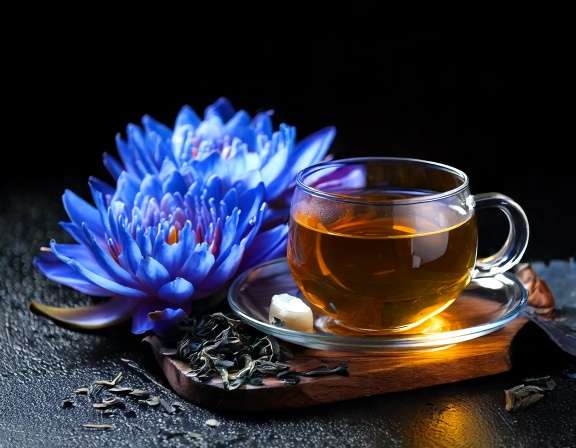
A warm cup of blue lotus tea can feel like a quiet pause at the end of a loud day. Made from the blue lotus flower, this herbal tea is often linked with calm, ritual, and relaxation.
Many people reach for it when they want a gentle evening drink, a mood-friendly tea, or a simple way to slow down. At the same time, it’s smart to keep expectations grounded, because traditional use and modern proof are not the same thing.
That balance matters, especially if you’re curious but cautious. Below, you’ll find the benefits people talk about most, what research does and doesn’t show, how to brew it, and how to choose and store it well.
Blue lotus tea benefits people talk about most
Blue lotus tea has a soft reputation. People don’t usually reach for it like coffee or green tea. They choose it when they want less stimulation and more ease.
That interest makes sense. Herbal teas often become part of a nightly rhythm because they give you something warm, fragrant, and screen-free to focus on. If you already enjoy herbal teas for natural stress relief, blue lotus may feel like a natural next step.
A calming herbal tea for stress and bedtime routines
The most common reason people try blue lotus tea is simple, they want to relax. It is often used as a caffeine-free drink for the evening, especially by people who want a calm ritual before bed.
The tea itself won’t solve a stressful week. Still, the habit around it may help. Boiling water, steeping petals, and sitting still for ten minutes can slow your pace in a way that feels almost medicinal, even when it isn’t medicine.
Its flavor also plays a role. Blue lotus tea is usually light, floral, and a little earthy. Because it doesn’t hit the palate as hard as black tea or mint, it can feel softer and easier to sip at night.
Some people prefer it instead of caffeinated drinks after dinner. That swap alone may support a more restful evening, especially if coffee or strong tea tends to keep you alert.
Mood, mindfulness, and the ritual side of drinking blue lotus
Blue lotus has a long history in wellness and ceremonial traditions, which adds to its appeal today. For many tea drinkers, the draw isn’t only the herb itself. It’s the whole experience.
The aroma is part of that. A floral scent can shift the tone of a room fast, much like chamomile essential oil for relaxation. Then the warmth of the cup gives your hands something steady to hold, which can help anchor your attention.
That mindful side matters. When you sip slowly, notice the scent, and step away from noise, the tea becomes more than a drink. It becomes a cue to breathe, settle, and be present for a few minutes.
Blue lotus tea may be soothing because of both the herb and the ritual around it.
That doesn’t make it mystical or dramatic. It simply means small sensory habits can shape how you feel.
What the research says, and what to keep in mind
Interest in blue lotus is growing, but the evidence is still catching up. That’s true for many herbs with a long cultural history.
A balanced view helps here. Traditional use can be meaningful, yet it doesn’t replace strong human studies on safety, dose, and clear effects.
Traditional use versus modern evidence
Blue lotus has been used for a long time in traditional settings, often in ways tied to relaxation, ceremony, and mood. That history is part of why people still seek it out.
Still, modern human research on blue lotus tea is limited. There isn’t enough high-quality evidence to confirm every benefit often repeated online. In other words, the tea may help some people feel calmer, but science has not firmly established it as a treatment for stress, anxiety, or sleep problems.
That’s why careful wording matters. “May help” is fair. “Cures” or “treats” is not.
This gap between tradition and proof doesn’t mean the tea has no value. It means you should approach it the way you would any herb, with interest, a little patience, and realistic expectations.
Who should be careful with blue lotus tea
Start small, especially if it’s your first time. A modest serving gives you a chance to notice taste, tolerance, and how your body responds.
Use extra caution if you’re pregnant or breastfeeding. Unless a qualified healthcare professional says it’s okay, it’s better to avoid it.
The same goes if you take medication or manage a health condition. Herbs can interact with the body in ways that aren’t obvious at first, and your doctor or pharmacist can help you spot concerns.
Some people may feel drowsy after drinking blue lotus tea. Because of that, don’t drive or do anything that needs sharp attention if the tea makes you sleepy.
If you have a history of plant allergies, check the ingredient label and choose a plain product without extra herbs mixed in.
How to make blue lotus tea at home
Blue lotus tea is easy to make, which is part of its charm. Most people buy it as dried whole flowers or loose petals. Whole flowers can feel a bit more special, while loose petals are often easier to measure.
Flavor matters too. Expect a light floral taste with a faint earthy note. It is not bold or sweet on its own, so some people love its softness while others prefer to blend it.
A simple blue lotus tea recipe for beginners
This basic method keeps things easy and lets you taste the herb clearly.
You’ll need:
- 1 to 2 teaspoons dried blue lotus petals, or 1 small dried flower
- 8 to 10 ounces hot water
- Optional, 1 teaspoon honey
Use water that’s hot but not violently boiling, around 190 to 200 degrees F works well. If you don’t check temperature, bring water to a boil, then let it sit for about a minute.
Add the petals or flower to a teapot, mug infuser, or French press. Pour the hot water over the herb and cover it while it steeps. Let it sit for 5 to 8 minutes for a lighter cup, or up to 10 minutes if you want a fuller flavor.
Strain, then sip as is. If you want a softer finish, stir in a little honey.
The final cup is usually light, floral, and slightly earthy. It’s gentle rather than dramatic, which is why many people enjoy it as a slow evening tea.
Two easy ways to customize the flavor
If plain blue lotus tastes too subtle, a simple blend can round it out without losing its calm feel.
Blue lotus and chamomile bedtime blend
Use 1 teaspoon blue lotus petals and 1 teaspoon chamomile flowers in 10 ounces of hot water. Steep for 5 to 7 minutes, then strain. This mix tastes softer and sweeter than blue lotus alone, and it fits nicely into an evening routine.
Blue lotus with honey and lemon
Steep 1 to 2 teaspoons of blue lotus in 8 ounces of hot water for about 6 minutes. Add 1 teaspoon honey and a small squeeze of lemon after straining. The honey smooths out the earthy side, while the lemon brightens the cup.
If you enjoy experimenting, keep your blends simple at first. One extra herb or flavor is often enough.
How to choose, use, and store blue lotus tea
A good tea starts with a good product. Since blue lotus isn’t as common as peppermint or chamomile, quality can vary a lot from one seller to another.
That means a little label reading goes a long way.
What to look for when buying blue lotus
Choose a seller that gives clear product details. The package should tell you what plant part you’re buying, where possible, and whether it’s loose petals, whole flowers, or a blend.
Look for dried herbs that appear clean and fresh, not dusty, stale, or oddly damp. Whole flowers should still have visible shape and color. Loose petals should look like petals, not powder and crumbs.
Plain products are often the safest choice for beginners. Blue lotus mixed with many extra herbs may taste nice, but it makes it harder to know what you’re reacting to or enjoying.
Also check for unnecessary additives. Artificial flavoring, heavy fragrance, or vague ingredient lists are not a great sign.
Best time to drink it and how to store it well
Most people drink blue lotus tea in the evening or during slow parts of the day. It fits best when you want quiet, not stimulation.
That timing also helps if the tea makes you feel sleepy. A late-night cup, a reading break, or a bath-and-tea routine usually makes more sense than drinking it before work or errands.
For storage, keep the dried flowers or petals in an airtight container away from heat, light, and moisture. A cool cupboard is better than a sunny shelf. If the herb loses its scent, color, or freshness, the flavor will drop too.
You don’t need a fancy setup. A clean glass jar or well-sealed tea tin works well as long as the herb stays dry.
Blue lotus tea can be a soothing choice if you enjoy floral herbal blends and slow evening habits. Its strongest appeal is often the calm ritual around it, paired with a gentle, caffeine-free cup.
At the same time, blue lotus tea isn’t a cure-all, and the research behind many claims is still limited. Start simple, buy quality herbs, and pay attention to how you feel after drinking it.
Sometimes the best tea is the one that helps you pause long enough to hear yourself think.
Stay Connected for More Natural Living Inspiration
If you enjoyed this post about herbal wellness and love discovering natural ways to refresh your home and wellness, don’t miss out on future recipes and clean-living tips! Subscribe to the blog for weekly DIYs, wellness inspiration, and herbal remedies delivered straight to your inbox.
Don’t forget to visit my Amazon storefront for the links to my favorite essential oils, herbal teas, and natural recipes. I also create YouTube ambiance videos for sleeping; a channel I created to help people who have trouble sleeping. The link to all social media content is here.
Thanks for coming by!

Leave a Reply