(DISCLAIMER: I am not a doctor, and you should consult your healthcare professional before starting any health regimen. Some links are commissioned and supports the blog)

Key Takeaways
- Skin comfort and appearance: Often used in diluted facial or body oils to help dry patches feel softer and to support mature-looking skin’s glow.
- Mouth care support: Traditionally associated with gum comfort and fresher breath, but it needs extra caution, and it’s not for swallowing.
- Calming, steady aroma: The scent feels grounding, many people use it during meditation, journaling, or wind-down routines.
- After-activity comfort: In a properly diluted massage blend, myrrh can feel warming and soothing on tired muscles.
- Safety first: Always dilute, patch test, skip internal use, and use extra caution with pregnancy, kids, pets, and blood thinners (or bleeding disorders).
The cap comes off, and the air changes. Myrrh smells like warm resin and old wood, like a quiet room lit by a single lamp. It’s the kind of scent that asks you to slow down, even if your to-do list doesn’t agree.
People reach for myrrh essential oil for simple reasons, a little extra comfort for dry skin, a steadier mood, and a cleaner-feeling routine. This post breaks down myrrh essential oil benefits in realistic terms, plus safe ways to use it at home.
Myrrh isn’t a cure, and it can’t replace medical care. Think of it as supportive, like a soft blanket on a tired day. Quality matters, dilution matters, and a “less is more” approach often works best.
What myrrh essential oil is, and why it smells so grounding
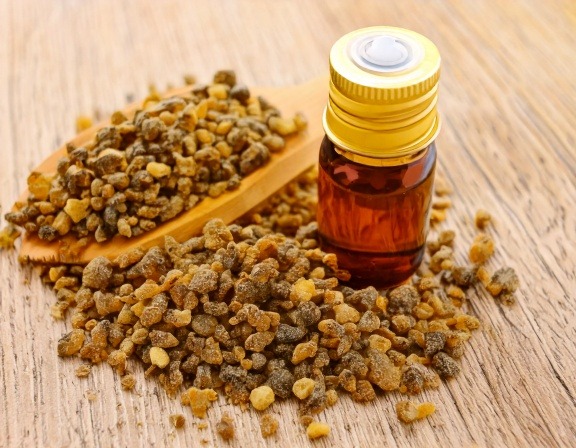
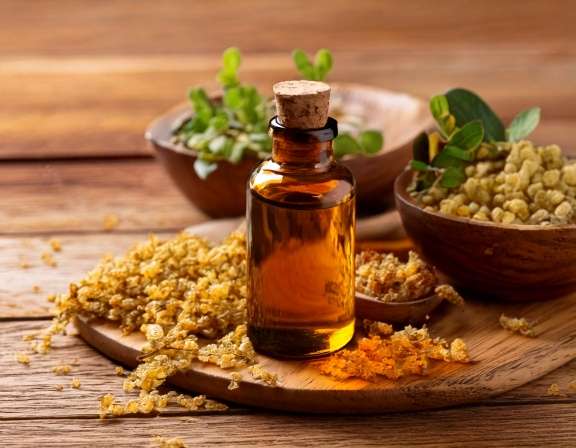
Myrrh comes from the hardened resin of Commiphora trees, which grow in dry regions (often parts of Africa and the Middle East). When the bark is cut, the tree releases sap that dries into resin tears. Those amber-brown pieces are what we think of as myrrh.
To make myrrh essential oil, producers most often use steam distillation. Steam passes through the resin, carrying aromatic compounds into a cooling system where oil and water separate. Because myrrh starts as a sticky resin, the oil can be thicker, darker, and slower to pour than many essential oils. Sometimes it even needs a little warmth from your hands to flow easily.
The scent is the reason many people fall in love with it. Myrrh smells earthy, slightly smoky, and faintly sweet, like dried sap and polished wood. That grounding feel comes from its natural chemistry, including sesquiterpenes (aromatic molecules found in many “base note” oils) and heavier resin-like compounds that make the aroma linger.
Myrrh is also a classic blender. It can deepen softer scents and make a blend feel more anchored, especially in evening routines.
Quick buying tips that help you avoid disappointment:
- Look for the botanical name (often Commiphora myrrha, sometimes Commiphora molmol depending on labeling).
- Check for a dark glass bottle (amber or cobalt) to protect the oil from light.
- If listed, note the country of origin and distillation method.
- Trust your nose: it should smell resinous and grounded, not sharp, sugary, or overly perfumed.
If you’re new to blending, it also helps to learn how carriers work and what dilution actually means. This guide on safe dilution ratios for essential oils makes the whole process feel simpler.
Myrrh essential oil benefits you can actually feel in daily life
Myrrh’s reputation is ancient, but your routine is modern. The most useful benefits are often the quiet ones, the small upgrades you notice after a week of consistent, safe use.
Below are the everyday reasons people keep myrrh on the shelf, along with gentle ways to try it without turning your bathroom into a chemistry lab. Keep it slow, keep it diluted, and treat your skin like it’s giving you feedback (because it is).
Skin support: comfort for dry patches, rough spots, and mature-looking skin
Myrrh is a go-to when skin feels thin, tight, or dull. People often use it for dry patches, rough texture, and the look of tired, mature-looking skin, especially in colder months when indoor heat steals moisture like a sponge.
Why does it stay popular in skincare routines? Part of it is the aroma, but part is how it pairs with a nourishing carrier oil. The goal isn’t to “fix” skin overnight. The goal is to help skin feel more comfortable and supported, like adding a little cushion to your daily moisture.
A simple way to try it at home: add 1 to 2 drops of myrrh essential oil to 1 teaspoon of carrier oil (jojoba, sweet almond, or fractionated coconut are common). Smooth it over a small area, then wait.
Patch test first (inner forearm is easy), and avoid broken skin, the eye area, and other sensitive zones. If your skin stings, flush with carrier oil, not water, and stop.
Scent pairing can make a big difference if you’re using it at night. Myrrh often blends nicely with frankincense or lavender, creating a soft, steady aroma that feels like exhaling slowly.
Mouth and gum care: a classic use, with extra safety steps
Myrrh has a long history in mouth care traditions, often linked with fresh breath and gum comfort. That history is real, but the modern caution is also real: essential oils don’t belong inside your mouth unless you’re using a professionally formulated product and following its label.
DIY mouthwash is where many people get into trouble. The mouth is sensitive, and undiluted essential oil can burn. Swallowing essential oils is also a hard no for home use.
So what can you do instead?
One safer option is aromatic support, using a diffuser for a clean-feeling routine while you tidy up your evening sink area. Another gentle option is an external approach: mix a very dilute blend and massage along the jawline and neck, staying away from lips and all mucous membranes. This is more about the relaxing ritual and aroma than “treating” anything inside the mouth.
If you’re interested in traditional oral care oils, clove is another classic, but it’s strong and needs respect. This post on clove essential oil for oral health and gum care is helpful for understanding why “powerful” also means “easy to misuse.”
For ongoing gum pain, bleeding, or tooth trouble, a dentist is the right next step. Essential oils can support routines, but they can’t replace diagnosis.
Relaxing, steadying aroma: support for stress, meditation, and sleep routines
Myrrh doesn’t smell like candy. It smells like stillness. If lavender is a soft pillow, myrrh is a wooden chair beside a window, steady, quiet, and patient.
Many people use myrrh in moments when their nervous system feels loud, after a busy workday, before a hard conversation, or when sleep feels slippery. The benefit here isn’t magic. It’s association and atmosphere. When the same scent shows up in the same calm routine, your body starts to recognize the cue.
Diffuser guidance that keeps things comfortable: start with 2 to 4 drops in water, run it in short sessions, and keep the room ventilated. Myrrh is a heavier note, and too much can feel intense.
A simple bedtime idea: diffuse myrrh for 20 minutes while you journal, stretch, or read something light. Then turn the diffuser off before sleep. This keeps the scent from becoming background noise, and it lowers the chance of irritation overnight.
If you want a cozier aroma, pair myrrh with a softer oil like lavender. If you want something brighter, a small amount of citrus can lift it, but keep the total drop count modest.
After-workout comfort: soothing support for tired muscles when diluted
After a workout, even a gentle one, muscles can feel used up, like a wrung-out towel. Myrrh is often added to massage blends for a warming, comforting feel on tired areas, especially shoulders, calves, and lower back.
People like it because it feels grounding, and because massaging with a slower, resinous scent can turn recovery into a ritual instead of a chore. The real star here is still the massage and the carrier oil, myrrh is the supporting note.
A simple blend for a small area: add 2 drops of myrrh essential oil to 1 tablespoon of carrier oil. Massage into one targeted spot, not your entire body. Avoid sensitive skin, and wash hands after.
Stop if your skin feels hot, looks red, or starts itching. Comfort should feel like comfort, not like a warning sign.
If you’re building a broader recovery routine, you might like this guide on essential oils for joint pain relief, especially for ideas on other oils people use after activity.
Extra caution matters here if you take blood thinners or have bleeding concerns. That’s a good moment to check with a pharmacist or clinician before making myrrh part of regular massage use.
How to use myrrh oil safely, and when to skip it
Myrrh rewards patience. Used the right way, it feels supportive. Used carelessly, it can irritate skin fast.
Start with dilution. For the face, many people stick to 0.5 to 2 percent (about 1 to 4 drops per 2 teaspoons of carrier oil). For the body, 1 to 3 percent is common (about 2 to 6 drops per 2 teaspoons). If you’re sensitive, stay on the low end.
Patch testing saves you from regret. Mix your blend, apply a small amount to your inner forearm, and wait 24 hours. If you get redness, itching, or swelling, skip it.
Myrrh is not known as a major phototoxic oil, unlike some citrus oils, but it’s still smart to be cautious with sun exposure after using any new topical blend. If you’re applying something new before a day outside, keep it conservative.
Storage matters more than people think. Keep the bottle tightly closed, away from heat and light, ideally in a cool cabinet. Oxygen and sunlight can change an oil over time.
A few clear safety reminders:
- No internal use at home, don’t swallow it, don’t add it to water, don’t DIY capsules.
- Keep away from eyes, inner nose, lips, and other mucous membranes.
- Avoid use during pregnancy unless a qualified clinician says it’s appropriate.
- Use extra care around kids and pets, and diffuse in a well-ventilated space for short sessions.
- If you take blood thinners or manage a bleeding disorder, talk with a pharmacist or clinician before regular topical use.
- Choose a carrier oil that matches your skin, jojoba for balance, sweet almond for softness, grapeseed for a lighter feel.
If you want to keep your home routine simple and safety-focused, a small collection of basics can go a long way. This post on building a natural first aid kit is a helpful reminder that you don’t need dozens of oils to get started.
Conclusion
Myrrh essential oil benefits are often felt in the small moments, softer-feeling dry patches, a calmer evening mood, a steadier breath when your day has been loud. It’s not a cure, but it can be supportive when you use it with care and realistic expectations.
Keep the basics close: dilute it, patch test it, and go slow. Treat your skin and your senses like they deserve patience, not pressure.
Your next step can be simple. Pick one use to try this week, a diluted skin oil after a shower, or a 20-minute diffuser session while you wind down. Then notice what changes, not dramatically, but gently, like a room getting quieter as the sun goes down.
Stay Connected for More Natural Living Inspiration
If you enjoyed this post about herbal wellness and love discovering natural ways to refresh your home and wellness, don’t miss out on future recipes and clean-living tips! Subscribe to the blog for weekly DIYs, wellness inspiration, and herbal remedies delivered straight to your inbox.
Don’t forget to visit my LinkTree for the links to my favorite essential oils, herbal teas, natural recipes, YouTube ambiance videos for sleeping; a project I created to help with insomnia symptoms and the second channel, Rooted in Nature YouTube Channel both channels feature herbal recipes for wellness and home.
Thanks for coming by!
Leave a Reply