
(DISCLAIMER: I am not a doctor, and you should consult your healthcare professional before starting any health regimen. Product links are commissioned and supports the blog)

When your body feels tired but your thoughts keep circling, bedtime can feel farther away than it should. A soft herbal scent may help mark the moment when the day begins to slow.
Basil essential oil can add a fresh, green note to a calming nighttime routine. Aromatherapy may support a relaxed mood for some people, but research on basil oil for stress and sleep remains limited. It isn’t a treatment for anxiety or insomnia.
You can use a small amount in a diffuser, a diluted body oil, or a linen mist. The recipes below also cover essential safety rules, so you can create a gentle evening ritual without overusing the oil.
Key Takeaways for Using Basil Essential Oil at Night
- Basil oil may support a calmer bedtime mood through its scent, although results vary from person to person.
- Begin with one or two drops and a short exposure instead of using a strong aroma all night.
- Always dilute basil oil before applying it to your skin.
- Never swallow essential oil or add it directly to drinking water, tea, or another beverage.
- Stop using it if you notice irritation, headache, coughing, breathing changes, or another unwanted symptom.
- A steady routine with dim lights, slower breathing, and fewer screens is likely to matter more than the oil alone.
What Basil Essential Oil May Do for Evening Stress
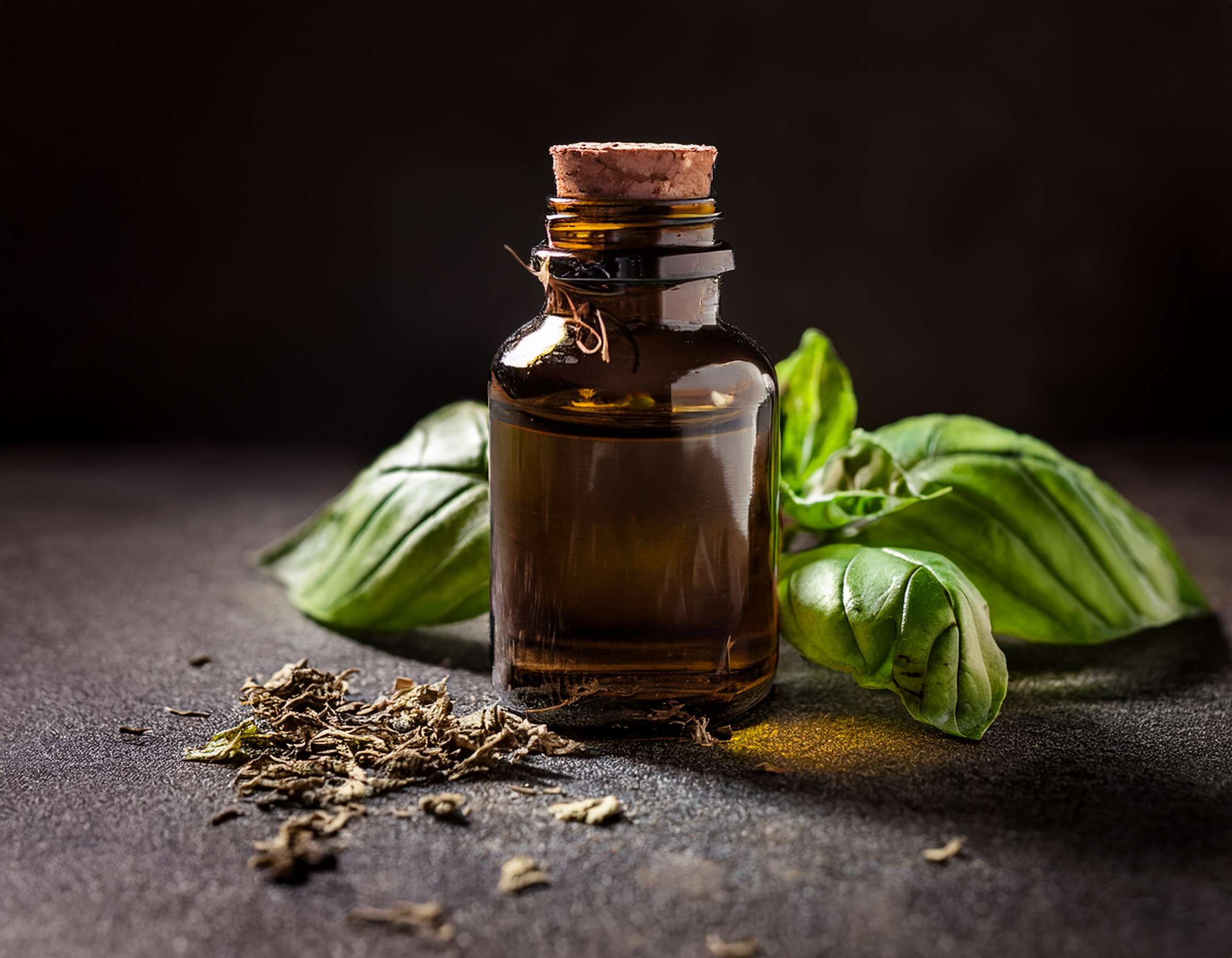
Basil essential oil comes from the aromatic parts of basil, usually Ocimum basilicum. Manufacturers commonly extract the oil through steam distillation. The result is a highly concentrated liquid with a sharp, green, sweet, or slightly spicy scent, depending on the plant and production method.
When you inhale the aroma, volatile compounds travel through the nose and interact with olfactory receptors. Your brain then processes the scent alongside memories, emotions, and environmental cues. That response can make a familiar aroma feel comforting, refreshing, or too stimulating. Scent affects people differently, so basil may help one person settle while keeping another person alert.
Traditional aromatherapy uses basil for an uplifting or balancing atmosphere. However, studies on basil oil for stress, anxiety, or sleep are smaller than research on some other essential oils. Evidence does not show that basil oil sedates you or guarantees better sleep. A more realistic goal is to pair a mild scent with habits that tell your nervous system the day is ending.
Try dimming the lights, putting your phone away, stretching for a few minutes, writing down tomorrow’s tasks, or taking slow breaths while the aroma fills the room. Over time, the repeated sequence can become a familiar bedtime cue. You can find more gentle ideas for building a home wellness routine in these natural self-care practices.
Basil oils also come in different chemotypes. A chemotype is a plant variety with a distinct chemical profile, and that profile can affect the scent and safety considerations. Look for the botanical name, plant part, extraction method, batch information, and clear usage directions before buying. A reputable label should tell you what is in the bottle instead of promising instant calm or guaranteed sleep.
Three Easy Ways to Use Basil Essential Oil Before Bed
Choose one method for your first evening. Using several products at once makes it harder to tell what your body likes. Start with one or two drops, keep the room ventilated, and avoid leaving a diffuser on while you sleep.
A Gentle Basil and Lavender Diffuser Blend
This blend creates a soft herbal-floral scent while you get ready for bed. It suits people who enjoy lavender and prefer not to apply essential oils to their skin.
INGREDIENTS
- 1 drop basil essential oil
- 2 drops lavender essential oil
- The diffuser’s recommended amount of water
Add the water to your diffuser according to its manual, then add the basil and lavender oils. Run the diffuser for 15 to 30 minutes while you change clothes, tidy the room, or read. Turn it off before you fall asleep. Keep the device away from your bed, curtains, electronics, and water-sensitive surfaces. Use fewer drops in a small room, since concentrated scent can become unpleasant quickly. Anyone who dislikes lavender can use plain basil oil at a lower amount instead.
A Diluted Basil and Cedarwood Body Oil
This small batch offers a warm, woody scent for a shoulder, hand, or foot massage. The formula is intentionally low strength for nighttime beginners, but skin sensitivity still varies.
INGREDIENTS
- 1 teaspoon jojoba oil or sweet almond oil
- 1 drop basil essential oil
- 1 drop cedarwood essential oil
Combine the carrier oil and essential oils in a clean small dish or bottle. Before using the mixture, apply a tiny amount to a small area of skin and wait to check for a reaction. If your skin feels comfortable, massage a small amount onto your shoulders, hands, or feet. Avoid your face, eyes, broken skin, and mucous membranes. Essential oils must be diluted before skin use. If you have sensitive skin, use plain jojoba or sweet almond oil without essential oils.
A Basil Pillow and Linen Mist for a Fresh Bedtime Cue
A linen mist gives you a brief scent without running a diffuser. It also works well for readers who want a lighter aroma near bedtime.
INGREDIENTS
- 2 tablespoons distilled water
- 1 tablespoon vodka or witch hazel
- 3 drops basil essential oil
Pour the ingredients into a clean 2-ounce spray bottle. Close it and shake well before every use, since essential oil and water separate. Lightly mist your pillowcase or bedding from a distance, never near your face. Test a hidden section first because oils may stain certain fabrics. Label the bottle and store it away from children and pets. Make a small batch, since homemade water-based sprays have a short shelf life and contain no tested preservative system.
Basil Essential Oil Safety Rules for a Peaceful Night
Essential oils are concentrated products, not ordinary cooking herbs. Never swallow basil oil, add it to herbal tea, or mix it into drinking water without direct guidance from a qualified medical professional. Water doesn’t safely disperse essential oil, so a few drops can contact the mouth and throat in a concentrated form.
For skin use, mix basil oil with a suitable carrier oil and perform a patch test first. Keep the mixture away from your eyes, lips, nose, and other mucous membranes. Wash your hands after application, ventilate the room, and store the bottle tightly closed in a cool place. A locked or high shelf helps prevent accidental use by children.
Ask a healthcare professional before using basil oil if you’re pregnant, breastfeeding, caring for a young child, managing asthma or epilepsy, prone to allergies, or living with sensitive skin. You should also ask before use if you take prescription or over-the-counter medicines. Product chemistry varies, and some basil oils may contain methyl chavicol, also called estragole. Follow the product label and seek individual advice when the label doesn’t provide enough information.
Pets need protection too. Essential oil vapors can bother animals, especially cats and birds. Keep pets away from the diffuser, use it only in a separate, well-ventilated area, or skip diffusion when animals share the room. Never apply basil oil to a pet or add it to an animal’s food or water.
What to Do If the Aroma Feels Wrong
A pleasant scent should not make you push through discomfort. If basil oil feels stimulating, causes a headache, worsens breathing, or irritates your skin, turn off the diffuser and move to fresh air. Wash topical oil away with soap and water, rather than trying to dilute it with more carrier oil. Seek medical help for serious, worsening, or lasting symptoms.
Persistent nighttime anxiety, panic, frequent waking, or ongoing trouble falling asleep deserves support from a qualified clinician. A bedtime scent can accompany care, but it shouldn’t replace assessment or treatment.
How to Choose a Safer Basil Oil and Know When to Skip It
Choose a bottle from a reputable seller with an intact seal and a clear label. Check for the botanical name, batch or lot number, ingredients, extraction details, storage directions, and contact information. Avoid products that promise instant sleep, cure anxiety, or make broad medical claims.
The aroma should feel agreeable before you use it. Smell a small amount from the bottle cap, rather than placing undiluted oil on your skin. If the scent feels sharp, overpowering, or unpleasant, choose another option.
Pregnant or nursing readers, people caring for children, and anyone managing a health condition may prefer a scent-free bedtime routine. The same choice can make sense for households with cats, birds, or other sensitive pets. Lower lights, clean sheets, quiet music, and slow breathing can create a calming cue without essential oils.
A Softer Way to End the Day
Basil essential oil may add a fresh, herbal note to your evening, but it isn’t a replacement for medical care or healthy sleep habits. Start with one low-intensity method, such as a brief diffuser session or a light linen mist, and pay attention to how your body responds.
If the scent feels comfortable, use it alongside a consistent bedtime rather than increasing the amount. Quiet breathing, lower lights, and a familiar routine can do much of the calming work before the first drop of oil leaves the bottle.
Stay Connected for More Natural Living Inspiration
If you enjoyed this post about herbal wellness and love discovering natural ways to refresh your home and wellness, don’t miss out on future recipes and clean-living tips! Subscribe to the blog for weekly DIYs, wellness inspiration, and herbal remedies delivered straight to your inbox.
Don’t forget to visit my Amazon storefront for the links to my favorite essential oils, herbal teas, and natural recipes. I also create YouTube ambiance videos for sleeping; a channel I created to help people who have trouble sleeping. The link to all social media content is here.
Thanks for coming by!




Leave a Reply