
(DISCLAIMER: I am not a doctor, and you should consult your healthcare professional before starting any health regimen. Some links are commissioned and supports the blog)

Key Takeaways
- Best-known skin benefits: Often used to support the look of calmer skin, less visible redness, and a more even tone.
- Who it may help: Great for skin that looks stressed, blotchy, or uneven, including post-blemish marks and weather-worn skin.
- Dilution matters: It’s concentrated, so it needs a carrier oil (especially for the face).
- Patch test basics: Try it on a small area first, wait 24 hours, and watch for redness, itching, or bumps.
- Quick safety note: This isn’t a cure or a medical treatment, keep it away from eyes, and talk to a clinician if you’re pregnant, nursing, or using prescription skin meds.
Helichrysum essential oil has a reputation in skin care circles for a reason. It’s one of those oils people try after they’ve tried everything else, then quietly keep it on their shelf because their skin seems to “behave” more when it’s in the routine.
This post breaks down helichrysum essential oil benefits for skin in plain language, what it’s best known for, and how to use it without irritating your face (or burning through an expensive bottle).
What Helichrysum essential oil is, and why skin care folks love it
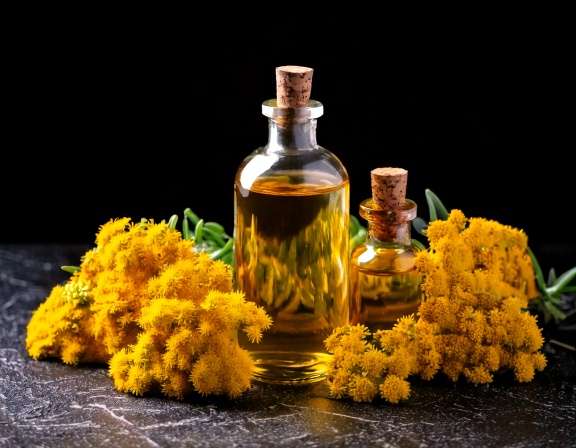
Helichrysum is a flowering plant, and the essential oil used in skin care is most often from Helichrysum italicum. You’ll also hear it called “immortelle” or “everlasting,” nicknames that come from how well the flowers hold their shape and color after being cut and dried.
The oil is usually made through steam distillation of the flowering tops. It takes a lot of plant material to make a small amount of oil, which is a big reason helichrysum can be pricey. Think of it like squeezing juice from a lemon versus trying to get juice from a whole bowl of dry herbs. The yield is low, so each bottle represents a lot of harvest and distillation time.
Quality can vary more than people expect. Helichrysum comes in different species, and even within H. italicum, the chemical makeup can shift based on growing region, climate, harvest timing, and how the distillation is done. You may see sellers mention “chemotypes.” That’s just a way of saying, “This plant tends to have a certain chemical profile,” which can change how it smells and how it feels on skin.
Speaking of scent, helichrysum is a little hard to describe until you’ve smelled it. It’s often warm, herbal, slightly sweet, sometimes like honey and dried hay with a faint tea-like note. In skin blends, that scent can feel comforting, and it pairs nicely with gentler oils and botanicals without overpowering them.
So what’s science looking at with helichrysum? Most talk centers around its natural compounds that show antioxidant and soothing activity in lab settings. That doesn’t mean it “treats” skin conditions, but it helps explain why so many people use it when their skin looks irritated, reactive, or just tired.
Helichrysum vs. other “skin” oils like lavender and frankincense
If you already own lavender or frankincense, you might wonder if helichrysum is redundant. It usually isn’t, but it also isn’t a must-have for everyone.
Helichrysum is often the one people reach for when they’re focused on the look of post-blemish marks, uneven tone, or skin that looks flushed after stress, wind, or too much sun. It’s also popular when someone wants a “repair vibe” in their nighttime face oil.
Lavender tends to be the more general “calm everything down” choice. It’s commonly used for soothing and for routines that need to feel gentle and familiar. Frankincense often shows up in blends for dry, mature-looking skin, when the goal is a more cushioned, comfortable feel and a healthy-looking glow.
Helichrysum essential oil benefits for skin, in real life terms
Let’s skip the lab language and talk about what people actually notice when helichrysum works for them. Most of the time, it’s not dramatic overnight change. It’s more like the skin looks less “angry,” makeup sits better, and the face feels more comfortable from day to day.
Here are the most common, real-world reasons people use helichrysum in skin care:
- Helps calm the look of redness: When your cheeks or nose tend to look flushed, a properly diluted blend can support a more even-looking appearance over time.
- Supports a more even tone: Many people add it to routines aimed at the look of post-blemish marks or uneven patches.
- Backs up a healthy-looking barrier: A strong barrier is what makes skin look smooth and less reactive. Helichrysum is usually paired with barrier-friendly carrier oils to support that goal.
- Antioxidant support for daily stress: Pollution, poor sleep, and life stress can show up on your face. Antioxidant-rich botanicals can be a nice add-on to a solid routine.
- Comfort after sun or wind: Not as a “fix,” but as part of a soothing body oil after you’ve been outdoors, especially when skin feels tight and looks a bit pink.
A quick reality check: results depend on the whole routine. If your cleanser strips your skin, if you never moisturize, or if you skip sunscreen, even the best oil won’t have much to work with. Think of helichrysum like seasoning. It can make a good meal better, but it can’t rescue a burned dinner.
Consistency matters too. Using a low dilution a few nights a week for a couple of weeks tends to beat random heavy use. And because helichrysum is expensive, using it correctly also means you’re not wasting drops.
For blemish-prone skin, post-blemish marks, and uneven tone
Helichrysum is a favorite for people who get breakouts, then get stuck with that lingering “shadow” after the blemish is gone. In a gentle blend, it’s often used to support the look of calmer skin and a more even finish.
A simple way to use it is a spot-style dilution in a carrier oil, then dab it only where you want extra support. Another option is adding it to a face oil blend you already tolerate, so you’re treating the whole face as a system, not just chasing one spot.
Two easy routine examples:
- If you use a basic face oil at night, mix helichrysum in at a low dilution and apply a few drops to damp skin after moisturizer.
- If you prefer targeted use, dilute a single drop well, then apply only to areas with post-blemish marks a few nights a week.
Don’t apply it “neat” (straight from the bottle). That’s where irritation tends to start, especially if your skin barrier is already cranky.
For dry, sensitive, or mature-looking skin that gets easily irritated
If your skin gets tight, flaky, or reactive, helichrysum can be a nice addition, but only if you keep it gentle. Sensitive skin doesn’t need more intensity, it needs fewer surprises.
Pair helichrysum with carrier oils that tend to feel barrier-friendly, like jojoba, squalane, rosehip, or calendula-infused oil. If you want a deeper guide to picking carriers and getting the ratios right, this is worth keeping open while you mix: safe dilution ratios for essential oils.
A few tips that matter here:
Use less than you think you need. Fragrance sensitivity is real, even with “natural” products. Try it at night first, when you’re not layering makeup on top. Then commit to sunscreen the next morning, especially if uneven tone is part of why you’re using it.
How to use helichrysum on skin safely, without wasting a pricey oil
Helichrysum is one of those oils where safe use also happens to be the best way to stretch your bottle. Most people don’t need a strong mix. They need a steady, skin-friendly routine.
Start by choosing a carrier oil that fits your skin type, then pick a dilution level you can stick with. Use it a few times a week, then adjust based on how your skin responds. If your face is already irritated from weather, over-exfoliation, or strong acne products, wait until things settle before adding anything new.
Here are three simple ways people use helichrysum topically (not full recipes, just the idea):
Calming night face oil: Add a very low dilution of helichrysum to jojoba or squalane, then press 2 to 4 drops into skin after moisturizer.
Post-sun body oil: Mix into a tablespoon of a gentle carrier oil, then apply to clean, slightly damp skin after a shower (don’t use it on burned skin, and don’t skip SPF the next day).
Targeted roller for the look of old spots: Use a roller bottle with a low-to-moderate dilution, then swipe only on areas you’re trying to make look more even.
Storage helps too. Keep it in dark glass, cap it tightly, and store it somewhere cool and out of direct light. If the scent changes to smell sharp, sour, or “off,” or if the oil starts to irritate when it didn’t before, it may be past its prime.
Easy dilution guide for face and body (with patch test steps)
For facial skin, most people do best at 0.25 to 0.5 percent. For body use, 1 percent is a common sweet spot. For short-term targeted use (like a small area you’re focusing on), some people tolerate up to 2 percent, but only if their skin is already used to essential oils.
Here are easy conversions you can use right away:
- Face (0.25 to 0.5 percent): Use 1 drop per 2 to 4 teaspoons of carrier oil.
- Body (1 percent): Use 3 drops per tablespoon of carrier oil (or 1 drop per teaspoon).
- Targeted short-term (up to 2 percent): Use 6 drops per tablespoon of carrier oil, and keep it to small areas only.
Patch test steps (worth the two minutes it takes):
- Apply a small amount of your diluted blend to the inner arm or behind the ear.
- Leave it alone and don’t wash that spot for 24 hours.
- Watch for itching, redness, swelling, bumps, or a burning feeling. If any show up, don’t use the blend.
Frequency: start with 2 to 3 nights a week. If your skin stays calm, you can move up slowly. With helichrysum, slow and steady is usually the smarter plan.
Common mistakes: using too much, mixing with strong actives, and skipping sunscreen
The biggest mistake is assuming “more drops” means faster results. Too much essential oil can stress the skin barrier, which can make redness and uneven tone look worse.
Another common issue is mixing helichrysum with strong actives in the same routine. If you use exfoliating acids (like glycolic or salicylic), retinoids, or benzoyl peroxide, keep your essential oil blend for a different night, or at least a different step, depending on how sensitive your skin is. When in doubt, simplify.
Skipping sunscreen also trips people up. If you’re trying to fade the look of marks or uneven tone, daily SPF is what keeps that effort from sliding backward. Oils can support comfort and appearance, but they don’t replace sun protection.
And the basic safety reminders still count: keep oils away from eyes and mucous membranes, wash hands after applying, and don’t use essential oils on broken skin.
Final thoughts on helichrysum for skin
Helichrysum essential oil can be a great add-on if you want skin that looks calmer, more even, and less stressed. It’s especially popular for the look of post-blemish marks and redness that comes and goes with weather, stress, or an overworked routine.
Quality and dilution are what make the difference. Buy from a brand you trust, use a carrier oil that works for your skin, and stick with a low dilution long enough to judge it fairly. Safety basics matter too: patch test, avoid the eye area, and stop if your skin gets irritated.
If you want to try it, pick one simple method, use it for two weeks, and take a quick before photo in the same lighting. If your skin issues are persistent or painful, talk with a clinician instead of trying to DIY your way through it.
Stay Connected for More Natural Living Inspiration
If you enjoyed this post about herbal wellness and love discovering natural ways to refresh your home and wellness, don’t miss out on future recipes and clean-living tips! Subscribe to the blog for weekly DIYs, wellness inspiration, and herbal remedies delivered straight to your inbox.
Don’t forget to visit my Amazon storefront for the links to my favorite essential oils, herbal teas, and natural recipes. I also create YouTube ambiance videos for sleeping; a channel I created to help people who have trouble sleeping. The link to all social media content is here.
Thanks for coming by!

Leave a Reply