
(DISCLAIMER: I am not a doctor, and you should consult your healthcare professional before starting any health regimen. Product links are commissioned and supports the blog)

Key Takeaways
- Palo Santo Essential Oil may support stress relief, but it’s supportive, not a medical treatment.
- Start small, especially in a diffuser. Lower exposure is often the better choice.
- Use it in a ventilated room, and avoid running a diffuser nonstop.
- Keep sessions short, usually 20 to 60 minutes, then take a break.
- Be extra cautious with pregnancy, asthma, migraines, epilepsy, medication sensitivity, kids, and pet safety.
- Diffusion and skin use are not the same. For skin, always dilute with a carrier oil first.
- Buy only from brands that clearly share botanical name, origin, testing, and harvest details.
- Store the bottle away from heat, air, and light so the oil stays fresher and less irritating.
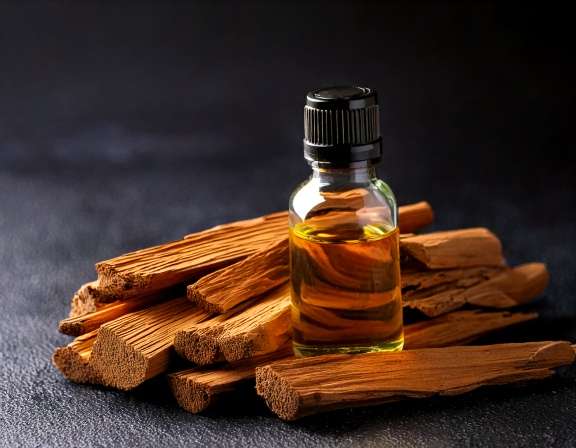
A warm, woody scent can change the feel of a room fast. That’s a big reason palo santo essential oil, often called holy wood and known for its distinct woody aroma, shows up in so many home aromatherapy routines.
Many people find it grounding, soft, and relaxing. Traditionally used for clearing negative energy and fostering a spiritual connection, it offers a grounding effect in home routines. Still, it helps to keep expectations clear. It may support relaxation and a restful mood, but it does not treat anxiety, depression, insomnia, or any medical condition.
Used well, it can become a low-effort part of your evening wind-down. The key is knowing what it can do, what it can’t, how to diffuse it safely, how to spot weak sourcing, and when to stop.
What palo santo essential oil can help with, and what it cannot do
Palo santo essential oil, derived from Bursera graveolens of the Burseraceae Family, is mostly used in Aromatherapy. Right now, support for its calming effects comes from traditional use, user experience, limited research, and what we know about compounds like limonene in its Woody Aroma. As of 2026, there still aren’t large human trials proving its Therapeutic Benefits relieve stress in a clinical sense.
That said, a scent doesn’t need to be a cure to be useful. For some people, palo santo essential oil can make a room feel softer and more settled. It may help take the edge off a stressful evening, support quiet routines like Meditation, Yoga, and Cleansing Rituals, and make bedtime feel more intentional.
A small mood shift matters. If your home feels less tense, your body may follow.
Still, this oil has limits. It can’t replace therapy, medication, or medical care. It doesn’t cure cancer, asthma, infections, panic disorder, major depression, or serious sleep problems. If a brand hints otherwise, that’s a red flag.
Why the scent may feel calming to some people
Aroma works through memory, mood, and routine. In other words, the scent itself matters, but the ritual matters too.
When you smell something warm and familiar, your body may start to associate that scent with rest. Over time, the act of filling a room with a calming aroma can become a cue to slow down. That’s one reason some people enjoy palo santo in the same way others use lavender or cedarwood. If you like exploring related options, these top mood-boosting essential oils for stress relief offer a few useful comparisons.
When stress symptoms need more than Aromatherapy
Sometimes stress is bigger than a scent can touch. Ongoing insomnia, panic attacks, chest pain, trouble working, or anxiety that keeps getting worse all deserve real support.
If stress is stopping you from functioning, Aromatherapy should be a side tool, not the main plan.
Simple diffuser blends that keep things easy and low-risk
For home use, an ultrasonic diffuser with water is usually the easiest place to start. If your diffuser has a low-mist setting, use that first. Palo Santo Essential Oil, with its signature woody aroma, can feel strong, so it’s smarter to begin on the low end.
Room size matters too. A blend that feels pleasant in a living room may feel heavy in a small bedroom. Start low, watch how you feel, and stop if the scent becomes irritating or stuffy.
After each session, turn the diffuser off and let the room air out. Also, clean the diffuser regularly so old oil residue doesn’t build up.
A small-room calm blend for reading, journaling, or quiet time
For a room around 100 square feet, use 2 to 4 total drops.
Try this blend:
- 2 drops palo santo essential oil
- 1 drop lavender
Add the oil to water in the diffuser. Run it for 20 to 30 minutes, then take a break.
This blend works well when you want the room to feel steady, not sleepy. The lavender softens palo santo without drowning it out.
A medium-room mood-lifting blend for afternoons
For a room around 200 to 250 square feet, use 5 total drops.
Try this blend:
- 3 drops palo santo essential oil
- 2 drops sweet orange essential oil
Diffuse for 30 to 45 minutes, then turn it off and open the room up a bit.
If you prefer, bergamot can replace sweet orange. Citrus oils in a diffuser do not carry the same sun-related concerns as citrus oils used on skin. In the air, they’re simply there for scent.
A larger-space evening blend, plus safe time limits
For a room around 300 to 400 square feet, use 5 total drops.
Try this blend:
- 3 drops palo santo essential oil
- 1 drop frankincense essential oil
- 1 drop cedarwood, vetiver, or myrrh
Frankincense and myrrh serve as excellent complements to further enhance the woody aroma. Use it for 30 to 60 minutes max, then air out the room. Don’t diffuse for hours at a time, and try to stay under 2 to 3 sessions a day.
More oil doesn’t mean more calm. It usually means more chance of a headache, throat irritation, or scent fatigue.
Safety first, diffusion, skin use, and who should be extra careful
Palo Santo Essential Oil is concentrated. Because of that, safe use starts with one simple rule: diffusion and skin use are different.
Diffusion exposes your nose and lungs. Skin use exposes your skin, and then sometimes your sun-exposed skin later. So the same casual attitude does not fit both methods.
Sensitivity varies a lot. One person may love a woodsy blend, while another gets a headache in ten minutes. Start with less, ventilate the room, and stop right away if symptoms show up.
Pregnancy, asthma, migraines, epilepsy, and medication sensitivity
If you’re pregnant, avoid palo santo essential oil unless a qualified clinician tells you it’s okay. The same cautious approach makes sense while breastfeeding.
Strong scents can also bother people with asthma or migraines. If fragrance tends to trigger symptoms for you, palo santo may not be the best fit. People with epilepsy, especially scent-triggered seizures, should avoid diffusion unless a clinician has cleared it.
Use extra care if you take sedatives, blood thinners, or tend to react strongly to fragrance in general. If you notice coughing, chest tightness, nausea, dizziness, or a rising headache, stop using it.
Child Safety and Pet Safety, especially around cats and dogs
Children need far lower exposure than adults. Babies are best kept out of routine diffusion. For older children, if you use it at all, keep it short, low-dose, and well ventilated.
Pets need even more care. Cats are generally more sensitive than dogs, and both need an easy way to leave the room. Keep the door open, use very short sessions, and never trap a pet near a running diffuser.
If a pet leaves the room, drools, coughs, pants, seems restless, or acts strange, turn the diffuser off. Around pets, keep any session to 10 to 15 minutes at most, if you use it at all.
Skin use vs diffusion, dilution, patch testing, and photosensitivity notes
Diffusion is usually the easier starting point. Skin use needs more caution.
Never apply palo santo essential oil straight to skin. While some oils have anti-inflammatory properties, use this oil carefully on skin with a carrier oil, especially for skincare. Check a dilution chart for appropriate ratios based on sensitivity, such as 0.5 to 2 percent for most adults. Patch test first by applying a small diluted amount to the inner arm and waiting 24 hours. If redness, itching, or stinging shows up, don’t use it.
Palo santo essential oil is not known as a major phototoxic oil. Even so, limonene can oxidize over time, and oxidized oil may irritate skin more easily. As a cautious best practice, avoid fresh sun exposure on newly treated skin.
How to buy palo santo essential oil without supporting bad sourcing
Palo santo, revered as sacred wood from Bursera graveolens, is often described as not endangered globally, but that doesn’t mean every bottle is harmless. Poor harvest practices can still damage dry forest habitat and local ecosystems.
That’s why sustainable sourcing matters. Many ethical sellers state that their high-quality Palo Santo Essential Oil comes from naturally fallen trees in Ecuador and Peru, properly aged wood, not living trees cut for fast profit. This Palo Santo Essential Oil is typically steam distilled and labeled 100% pure. Good sustainable sourcing should protect the tree, the forest, and the people who depend on both.
Marketing language can sound soothing while hiding basic facts. Skip the vibe-heavy copy and look for real product details.
A quick red-flags checklist before you buy
- No botanical name listed.
- Vague origin, such as “South America” with no country like Ecuador or Peru named.
- Suspiciously cheap price for a product that should take time and care to source.
- No GC/MS Report or batch info, so you can’t verify quality or consistency.
- Misleading terms like therapeutic grade, which don’t prove purity.
- Unclear harvest method, or no mention of whether the wood was naturally fallen trees and aged.
- No sustainability details, replanting info, or community-minded sourcing notes.
- Big spiritual claims that distract from missing product facts.
What transparent, ethical sourcing looks like
Better brands share the basics without making you dig. Look for the botanical name, country of origin such as Ecuador or Peru, harvest method from fallen trees, steam distilled process, 100% pure label, batch testing, and GC/MS Report access. Some brands also explain community partnerships or replanting work.
The more specific the label, the better. “Wildcrafted, sacred, premium, rare” means little on its own. A clear explanation of how the wood was collected means much more.
Storage, shelf life, and a quick at-home stress relief routine
Storage affects both scent and skin safety. Keep palo santo essential oil in a dark glass bottle, with the lid tightly closed, in a cool, dark place. Heat, air, and light speed up oxidation, and oxidized oil is more likely to smell flat or irritate skin.
A rough shelf life is 2 to 4 years, although the brighter top notes can shift sooner after opening. If the oil smells sharp, stale, or oddly sour, or if it suddenly starts causing irritation, it’s time to let it go.
A 10-minute routine for a calm reset at home
Keep the routine simple so you’ll use it.
- Crack a window or door for fresh air.
- Add a low-drop blend to your diffuser, where palo santo essential oil fosters a spiritual connection.
- Sit, stretch, breathe, or read for 10 minutes.
- Turn the diffuser off, then let the room air out.
That’s enough. You don’t need a long ritual or a heavy cloud of scent to feel a shift.
Frequently Asked Questions about Palo Santo
Can you use palo santo essential oil every day?
Sometimes, yes, but daily use isn’t always better. Short, low-dose sessions with breaks are a safer pattern.
Can you put it straight on skin?
No. Always dilute it in a carrier oil first and patch test. It’s also effective as a natural insect repellent when properly diluted.
Is it safe for pets?
Not reliably. Cats are especially sensitive, and even dogs may react. Pet safety means using extreme caution, ventilation, and short exposure, if any.
How long should you diffuse it?
Most home sessions should stay around 20 to 60 minutes, depending on room size and sensitivity.
This oil is not a substitute for medical or mental health care. If you’re pregnant, managing a health condition, or taking medication, check with a qualified clinician first.
A calm home routine works best when it stays simple
Palo Santo Essential Oil can be a gentle part of stress relief at home when you use small amounts, fresh air, and realistic expectations. It shines most as a mood-setting tool in an aromatherapy practice that supports grounding, not as a fix for serious symptoms.
Buy carefully, diffuse lightly, and store it well. Most of all, use less rather than more, and pay attention to how your body, your kids, and your pets respond.
Stay Connected for More Natural Living Inspiration
If you enjoyed this post about herbal wellness and love discovering natural ways to refresh your home and wellness, don’t miss out on future recipes and clean-living tips! Subscribe to the blog for weekly DIYs, wellness inspiration, and herbal remedies delivered straight to your inbox.
Don’t forget to visit my Amazon storefront for the links to my favorite essential oils, herbal teas, and natural recipes. I also create YouTube ambiance videos for sleeping; a channel I created to help people who have trouble sleeping. The link to all social media content is here.
Thanks for coming by!

Leave a Reply