
(DISCLAIMER: I am not a doctor, and you should consult your healthcare professional before starting any health regimen. Product links are commissioned and supports the blog)

Key takeaways for safe skin use at a glance
- Start with 1% for adult skin. It’s the best beginner strength for most people.
- Never apply Roman chamomile essential oil undiluted. Even gentle oils can sting.
- Patch test every new blend on the inner arm, then wait 24 hours.
- If your skin is very sensitive, begin with 0.5%.
- Choose a plain carrier oil, such as jojoba or sweet almond, so the oil spreads evenly.
- If you want a broader topical refresher, the safe essential oil use tips guide pairs well with this post.
Roman chamomile sounds soft, and it is, but skin can still react when the oil goes on straight. A small drop may smell soothing, yet too much strength can bring redness, stinging, or a warm flush fast.
This guide shows you how to dilute Roman chamomile essential oil for skin use with simple ratios that beginners can follow. You’ll get easy drop counts, carrier oil choices, and a safe way to patch test before you wear the blend.
This article is for adults, and sensitive skin needs extra care. If your skin reacts easily, start lower than you think you need. A tiny batch often tells you more than a strong one ever will.
What Roman chamomile essential oil is, and why dilution matters
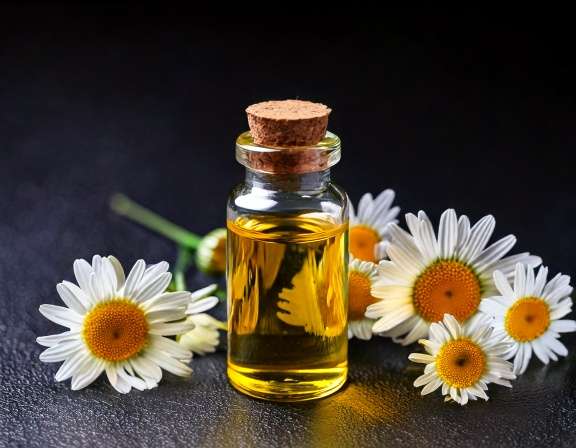
Roman chamomile essential oil comes from small, daisy-like flowers. People reach for it in skin care because its scent feels soft, sweet, and calm. It shows up in body oils, massage blends, and simple DIY routines for that reason.
Still, gentle does not mean harmless. When essential oil touches skin without a buffer, it can act like a sharp splash instead of a soft wash. Dilution helps the oil spread more evenly, lowers the chance of redness, and makes each drop easier to control.
That matters even more when you’re new to essential oils. A weaker blend gives you room to see how your skin responds before you move up a notch.
A good first blend should feel almost boring on skin. That is often a sign you got the strength right.
Why skin can react even to a gentle essential oil
Skin differs from person to person. What feels fine on one arm can irritate another. Dry skin, broken skin, and skin that already feels reactive are more likely to complain.
Undiluted essential oil can sting fast. It may feel hot, tight, or itchy within minutes. That reaction doesn’t mean the oil is bad. It means the strength is too high for direct use.
How dilution helps you start small and stay safe
Dilution means mixing the essential oil with a carrier oil, like jojoba or sweet almond. The carrier oil slows the contact with skin and helps the blend glide instead of sit in one place.
For beginners, the safest move is simple. Start with the lowest helpful amount, then only adjust if you truly need more. If a weak blend works, keep it weak.
Simple dilution ratios beginners can follow without math stress
For adult skin, 1% is the easiest place to begin. It gives you a light, usable blend without pushing your skin too hard. If your skin is very sensitive, 0.5% is the softer step.
A quick cheat sheet helps when you’re mixing small bottles. The numbers below are approximate, but they are easy to use at home.
| Bottle size | 0.5% blend | 1% blend | Easy use |
|---|---|---|---|
| 5 mL (1 tsp) | too small to measure well | 1 drop | tiny spot blend |
| 10 mL (2 tsp) | 1 drop | 2 drops | trial-size roll-on |
| 15 mL (1 Tbsp) | 1 to 2 drops | 3 drops | wrist or body oil |
| 30 mL (1 oz) | 3 drops | 6 drops | larger everyday batch |
The main idea is simple. Keep the mix light, especially at first. If you can round down safely, do it.
A beginner-friendly 1% ratio for everyday skin care
A 1% blend is the smart starting point for most adults. For a tiny batch, use 1 drop in 1 teaspoon (5 mL) of carrier oil. For a slightly larger bottle, use 3 drops in 1 tablespoon (15 mL).
That ratio works well for a body oil, a wrist blend, or a light skin application. It gives you enough Roman chamomile to notice, without making the mix feel heavy. A 30 mL bottle would need about 6 drops.
Quick starter recipe: mix 1 teaspoon jojoba oil + 1 drop Roman chamomile for a simple pulse-point blend.
A softer 0.5% option for very sensitive skin
If your skin reacts fast, begin with 0.5%. A simple version is 1 drop in 2 teaspoons (10 mL) of carrier oil. That makes the blend softer and easier to test.
This is a better first step if you’re new to the oil, or if your skin often turns pink after new products. For a 15 mL bottle, use 1 to 2 drops and keep the rest carrier oil. If the blend feels too weak, you can try a slightly stronger batch later.
How to scale the ratio for different bottle sizes
Small bottles are easier than they look. You don’t need perfect math, only a steady hand and a light touch. If you use a 10 mL roller bottle, 1 drop gives you a gentle test blend. If you fill a 15 mL bottle, 3 drops gives you the standard beginner mix.
If you make a 30 mL bottle, use 6 drops for 1%. That size is useful when you want one blend for a few days of body use. Keep the bottle labeled so you remember the strength later.
When the skin is the test, weaker is usually smarter. You can always make the next batch a little stronger.
Choosing the right carrier oil for a smooth, skin-friendly blend
A carrier oil does more than dilute the essential oil. It helps the blend spread, softens the feel on skin, and can change how fast the oil absorbs. That matters because a good carrier makes the whole mix easier to use.
If you want a broader starter list, the beginner essential oil guide is a helpful next read.
Best carrier oils for different skin types
Jojoba is a favorite for many beginners because it feels light and sinks in well. It suits normal, oily, and combo skin nicely.
Sweet almond feels smooth and gentle, so it works well for dry skin. Skip it if you have a nut allergy or know your skin dislikes it.
Fractionated coconut oil is another easy choice. It stays liquid and has a clean feel, which makes it handy for roller bottles and massage blends.
Olive oil is thicker and richer. It can work well for dry patches, though some people prefer a lighter oil for daily use.
The best carrier oil is the one your skin likes. Texture, absorption, and personal comfort matter more than trend.
How to mix a small batch at home
Mixing is simple. First, grab a clean glass bottle or small bowl. Then add the carrier oil, followed by the Roman chamomile drops.
Stir gently if you use a bowl. If you use a bottle, cap it and roll it between your palms. Label the bottle with the date, the oil, and the strength.
A fast home recipe looks like this:
- Add 10 mL jojoba oil to a clean bottle.
- Add 1 drop of Roman chamomile for a 0.5% blend, or 2 drops for a softer 1% trial.
- Cap the bottle and roll it gently.
- Patch test before you use it on a larger area.
A quick patch test and other safety rules you should not skip
Patch testing is the part people skip, then regret. A tiny test on the inner arm can save you from a full-body reaction later. For broader topical tips, the natural first aid remedies with essential oils page has more gentle-use ideas.
Use extra caution if you are pregnant, nursing, applying oils to children, or managing eczema, rosacea, or another skin condition. In those cases, talk with a healthcare professional before using essential oils on skin.
How to patch test Roman chamomile oil the right way
Put a small amount of the diluted blend on the inside of your forearm. Use just enough to cover a coin-sized spot.
Leave it alone for 24 hours. Don’t wash the area right away unless it feels uncomfortable.
Check the spot after a few hours, then again the next day. Watch for redness, itching, burning, or a tight feeling. If the skin stays calm, the blend is more likely to be a good fit.
When to stop using it and get advice
Stop using the blend if it causes irritation, a rash, stinging, or swelling. If you get a headache, feel lightheaded, or have any breathing trouble, get help right away.
Avoid the eyes, lips, broken skin, and any area that already feels raw. Never swallow the oil. Keep the bottle away from children.
If Roman chamomile has bothered you before, trust that signal. Skin memory is often wiser than wishful thinking.
Conclusion
Roman chamomile can be a gentle choice for skin, but only when it’s mixed with care. A 1% blend is the best place for most beginners to start, and 0.5% is safer when your skin is sensitive.
Keep the mix simple, use a carrier oil you already trust, and patch test every new batch. That small routine gives you a calm, skin-friendly blend instead of a guess. A little patience here goes a long way, and your skin usually rewards the softer touch.
Stay Connected for More Natural Living Inspiration
If you enjoyed this post about herbal wellness and love discovering natural ways to refresh your home and wellness, don’t miss out on future recipes and clean-living tips! Subscribe to the blog for weekly DIYs, wellness inspiration, and herbal remedies delivered straight to your inbox.
Don’t forget to visit my Amazon storefront for the links to my favorite essential oils, herbal teas, and natural recipes. I also create YouTube ambiance videos for sleeping; a channel I created to help people who have trouble sleeping. The link to all social media content is here.
Thanks for coming by!


Leave a Reply