
(DISCLAIMER: I am not a doctor, and you should consult your healthcare professional before starting any health regimen. Product links are commissioned and supports the blog)

Fresh sheets carry a soft, clean scent through the bedroom. A gentle room mist settles into the air, while a small roller bottle rests beside your sink with herbs suspended in golden oil. Helichrysum essential oil fits these simple rituals with its warm, earthy, slightly sweet aroma.
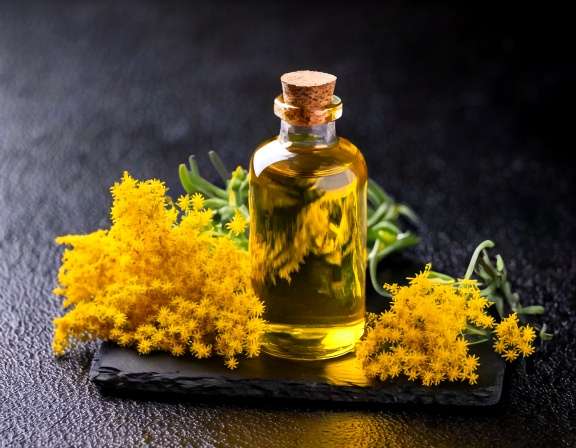
Also called everlasting or immortelle oil, helichrysum comes from the flowering tops of Helichrysum italicum. Its fragrance can feel honeyed and herbal, with a dry, spicy edge. You can use it in three small-batch recipes: a linen spray, a room mist, and an herb-infused roller blend.
These blends are for scent and everyday self-care. They aren’t medical treatments, disinfectants, or substitutes for professional care. Start with clean tools, modest amounts, and careful testing.
Key Takeaways for Using Helichrysum Essential Oil at Home
- You’ll make two water-based sprays and one low-dilution roller blend with helichrysum essential oil.
- Essential oils don’t mix evenly with water, so sprays need a suitable aromatherapy or cosmetic solubilizer.
- Use distilled water, clean bottles, and small batches. Water-based products can grow microbes over time.
- The roller blend is for external use only. Patch-test it, and take extra care around children, pets, pregnancy, allergies, asthma, and sensitive skin.
- Label every bottle with its ingredients and date, then discard any blend that changes in scent, color, or texture.
What to Know Before Making These Helichrysum Essential Oil Recipes
The plant used for most Italian helichrysum essential oil is Helichrysum italicum. It grows around parts of the Mediterranean, including Italy, Corsica, Spain, Portugal, and the Balkans. The flowers keep much of their color after drying, which helps explain the name everlasting.
The oil has a distinct scent. Some people notice honey, dried hay, curry-like spice, and fresh herbs. Others find it softer and more floral, especially when it’s blended with lavender, sweet orange, or cedarwood. Aroma can vary by harvest, growing region, extraction method, and bottle age.
Traditional herbal practice has used helichrysum preparations in skin-care and aromatic blends. Early laboratory research has examined compounds in the plant, but those findings don’t prove that an essential oil treats a health condition in people. Use it because you enjoy the scent and the routine, not because it promises to heal an injury or illness.
Choose a bottle labeled with the botanical name, plant part, extraction method, and batch or lot information. Store the oil tightly closed in a cool, dark place. For these recipes, gather clean amber or cobalt bottles, distilled water, a small funnel, and a measuring pipette.
Water-based sprays have a limited shelf life because distilled water isn’t sterile and the finished product contains no broad-spectrum preservative. Make small amounts, store them as directed, and throw them away if the aroma turns sour, the liquid becomes cloudy, or the texture changes.
Essential Oil Safety, Dilution, and Fabric Testing
Helichrysum essential oil is concentrated. For a beginner-friendly roller, use only a low topical dilution, around 1% in a 10 mL bottle. A few drops can sound insignificant, but drop size varies between bottle styles, so measure conservatively.
Essential oils float in water rather than dissolving into it. Shaking a bottle before use doesn’t make the mixture evenly dispersed or prevent concentrated droplets from landing on skin. A proper solubilizer helps distribute the essential oil through the water. Use one labeled for aromatherapy or cosmetic formulations, and follow its product directions.
Patch-test the roller on a small area of intact skin. Keep every blend away from eyes, mucous membranes, broken skin, and the mouth. Don’t ingest these recipes.
Spray a hidden section before treating bedding, clothing, unfinished wood, or delicate fabric. People with fragrance sensitivity, migraines, asthma, or allergies may want to skip sprays or test them in a well-ventilated room. Use extra caution around babies, children, pets, and birds. Pregnant or nursing readers, people taking anticoagulants, and anyone managing a medical condition should ask a qualified health professional before using helichrysum topically or aromatically.
A Fresh Linen Spray for Sheets, Towels, and Closets
This light linen spray adds an earthy scent to washable fabric. It refreshes the smell of sheets, towels, curtains, and closet linens, but it isn’t a stain remover or disinfectant.
Ingredients for a 2-ounce bottle
- Distilled water, enough to fill a 2-ounce spray bottle
- 1/2 teaspoon of an aromatherapy or cosmetic solubilizer, or the amount required by the product label
- 3 drops helichrysum essential oil
- 2 drops lavender essential oil, optional
Clean and dry the spray bottle, cap, funnel, and measuring tools. Add the solubilizer to a small glass cup, then add the helichrysum and lavender oils. Stir slowly until the oils are incorporated into the solubilizer. This blend-first step helps the essential oils disperse more evenly once water enters the bottle.
Pour the oil mixture into the bottle. Add distilled water until the liquid reaches the 2-ounce mark, leaving enough room for the sprayer. Cap the bottle and roll it gently between your hands. Label it with the ingredients and date.
Shake before every use. Hold the bottle several inches away and mist lightly over fabric, rather than soaking one spot. Let sheets, clothing, or towels dry fully before use. Test a hidden seam first, especially on silk, satin, rayon, dark fabric, or other delicate materials.
Store the bottle in a cool, dark place. Because this recipe has no preservative, make only what you’ll use within about two weeks. Refrigeration can extend freshness somewhat, but it may alter the scent and doesn’t make the spray sterile.
How to Keep the Linen Spray Light and Evenly Blended
Too much essential oil can leave spots, irritate skin, or make the fragrance overpowering. Too little solubilizer may leave visible oil droplets on the surface.
Start with one or two sprays on washable cotton. If the scent feels weak, adjust the next batch rather than adding extra oil to a finished bottle. A small test batch gives you more control and less waste.
A Calming Room Mist for Everyday Spaces
This separate formula suits a bedroom, entryway, home office, or bathroom. Helichrysum brings a warm base, while sweet orange adds brightness. Cedarwood creates a drier, woodsy variation.
Ingredients for a 2-ounce bottle
- Distilled water, enough to fill a 2-ounce spray bottle
- 1/2 teaspoon of an aromatherapy or cosmetic solubilizer, unless the product label gives a different ratio
- 3 drops helichrysum essential oil
- 2 drops sweet orange essential oil, or 1 drop cedarwood essential oil
Wash the bottle and sprayer with unscented soap, rinse well, and allow them to dry completely. Add the solubilizer to a clean cup. Stir in the helichrysum and complementary oil until the mixture looks uniform.
Transfer the mixture to the bottle, then add distilled water to the 2-ounce mark. Cap it, shake gently, and write the formula and date on a label. Shake again each time you use it. Start with one spray in a room, then add a second only if the fragrance remains comfortable.
This mist freshens a room’s scent. It doesn’t purify air, kill germs, remove allergens, or treat asthma, congestion, or another respiratory illness. Open a window when possible, especially in a small room.
If you enjoy comparing scent combinations, these DIY tea tree oil room spray recipes offer another format for homemade room fragrance. Keep every formula separate, and don’t combine leftover batches.
Use the mist sparingly around pets. Birds can be especially sensitive to airborne fragrances, so avoid spraying near cages or in enclosed areas where they spend time. If your pet shows coughing, sneezing, watery eyes, or unusual behavior, stop using the spray and provide fresh air.
Where to Use the Mist and When to Skip It
Spray a curtain hem, an entryway rug from a distance, or the open air of a well-ventilated room. Avoid faces, food preparation surfaces, pet bedding, humidifiers, and unfinished wood. The water can mark wood, while direct contact with food or skin isn’t appropriate for this formula.
People with migraines, asthma, or fragrance sensitivity may prefer one test spray in a large, open room. Skipping the mist is also a sensible choice if anyone in the home reacts to scented products.
An Herb-Infused Roller Blend for a Small Self-Care Ritual
A roller blend touches your skin, so it needs more care than a fabric or room spray. This recipe uses a low amount of helichrysum in jojoba oil, plus a small portion of calendula-infused oil for a botanical touch. The blend is for a pleasant personal scent and a simple pause in your day. It doesn’t heal wounds, bruises, inflammation, rashes, or other conditions.
Ingredients for a 10 mL roller bottle
- 2 drops helichrysum essential oil
- 2 mL strained calendula-infused jojoba oil
- Plain jojoba oil, enough to fill the bottle to 10 mL
To prepare the infused oil, use fully dried calendula in a clean, completely dry glass jar. Fresh herbs contain water, which can raise spoilage risk in an oil infusion. Fill the jar partway with the dried herb, cover it with jojoba oil, and close the lid. Keep the jar in a cool, dark place for one to two weeks, turning it gently every day or two.
Strain the oil through a fine filter or several layers of clean cheesecloth. Pressing the herbs can release particles, so filter the oil again if it looks cloudy or contains plant matter. A ready-made calendula-infused jojoba oil is another practical option.
Measure 2 mL of the strained infusion into the roller bottle. Add the helichrysum essential oil, then top up with plain jojoba oil to 10 mL. Leave a small amount of headspace for the roller insert. Fit the roller top, screw on the cap, and turn the bottle gently to combine the ingredients.
Label the bottle with its contents and date. Apply a small amount to your wrists or another pulse point after patch-testing the formula. Keep it away from eyes, lips, mucous membranes, and broken or irritated skin. Wash your hands after filling the bottle and before applying the blend.
How to Store and Use the Roller Safely
A dark glass roller bottle helps protect the oils from light. Keep it cool, close the cap after use, and avoid touching the roller ball to dirty skin.
Date the bottle and use the blend within the carrier oil’s stated freshness period. For a home herb infusion, a two- to three-month window is a practical limit. Discard it sooner if the aroma becomes sharp, sour, or rancid.
Don’t share a roller, ingest it, or apply it to a child without professional guidance. Use proper medical care for cuts, burns, rashes, and persistent skin changes.
Simple Home Care With a Measured Touch
Helichrysum essential oil can bring a warm, herbal note to clean linens, open rooms, and a small personal ritual. The three recipes stay low-waste because each uses a small amount and familiar tools.
The important habits are simple: dilute carefully, use a proper solubilizer, label every bottle, test fabric and skin, and respect fragrance sensitivities. Begin with one recipe, notice how the scent behaves in your home, and let the earthy character of helichrysum speak for itself without asking the oil to do more than it can.
Stay Connected for More Natural Living Inspiration
If you enjoyed this post about herbal wellness and love discovering natural ways to refresh your home and wellness, don’t miss out on future recipes and clean-living tips! Subscribe to the blog for weekly DIYs, wellness inspiration, and herbal remedies delivered straight to your inbox.
Don’t forget to visit my Amazon storefront for the links to my favorite essential oils, herbal teas, and natural recipes. I also create YouTube ambiance videos for sleeping; a channel I created to help people who have trouble sleeping. The link to all social media content is here.
Thanks for coming by!

Leave a Reply