(DISCLAIMER: I am not a doctor, and you should consult your healthcare professional before starting any health regimen. Some links are commissioned and supports the blog)

Key Takeaways:
- Hormonal breakouts, a common form of adult acne, often flare around the jaw and chin, and they don’t always respond to harsh, drying products.
- Geranium essential oil acne routines work best when they focus on soothing and balancing, not “stripping” the skin.
- Facial dilution matters, stay around 0.5% to 1% for spot use, and patch test every new blend.
- Use a simple spot blend in a carrier oil, apply with a clean cotton swab, and don’t reapply all day.
- Skip geranium essential oil if you’re pregnant, nursing, dealing with very reactive skin, or under a clinician’s acne plan that warns against essential oils.
Those monthly hormonal breakouts can feel like a rude surprise, even when you’re doing everything “right.” One week your skin is calm, the next it’s painful bumps that hang around like uninvited houseguests.
If you’re curious about geranium essential oil for hormonal breakouts, aromatherapy approaches work best to support the skin barrier, calm the look of redness, and keep a small flare from turning into a full-on situation with geranium essential oil.
Hormonal breakouts and what geranium can (and can’t) do
Hormonal breakouts, especially on oily skin, often show up in patterns, like along the jawline, chin, and lower cheeks. They can feel deeper, last longer, and show up right before your period or during stressful weeks. Think of it like your skin’s oil glands getting a loud memo to ramp up sebum production, while inflammation is already simmering in the background.
Geranium essential oil is popular for acne-prone skin because of its antiseptic properties and antibacterial effects, and it’s often described as balancing and toning with astringent properties. In real-life terms, many people find it helpful for hormone balancing on skin that feels oily in one area and dry in another. It also has a fresh floral scent that some people find calming, which matters more than it sounds. Stress and anxiety, along with sleep changes, can show on your face, even if you’re doing a solid skincare routine.
That said, essential oils aren’t acne medication. They don’t replace a dermatologist’s plan for cystic acne, infection, or scarring. And “natural” doesn’t automatically mean gentle. Geranium oil is still a concentrated plant extract, so the way you dilute and apply it makes the difference between “supportive” and “irritating.”
If you want a quick refresher on common uses and general safety considerations, this overview from Healthline is a good starting point: Healthline’s guide to geranium essential oil. Use it as context, then keep your routine simple and cautious.
Dilution for face acne: simple math, fewer mistakes
Facial skin is picky. Add a strong essential oil straight onto a blemish and you might get burning, peeling, or a darker mark that lasts longer than the pimple did. Dilution is the safety net.
A helpful rule for facial blends is 0.5% to 1% dilution, especially if you’re spot treating and you’re new to geranium. In everyday kitchen terms, many aromatherapy guides treat 1 teaspoon (5 mL) of carrier oil as the base. One drop of geranium essential oil in that amount is often considered about 1%, though drop size can vary.
Here’s a simple way to think about it without over-complicating things:
- For sensitive or dry skin (0.5%): 1 drop geranium essential oil in 2 teaspoons carrier oil.
- For normal skin spot use (about 1%): 1 drop geranium essential oil in 1 teaspoon carrier oil.
- For larger areas on the body (up to 2%): better for back or shoulders than the face.
Pick a carrier oil that won’t feel heavy. Jojoba is a common choice because it feels close to natural skin oils. Squalane is another option if you want something very lightweight. If you’re acne-prone, be cautious with rich oils that can feel occlusive for you (everyone’s pores behave differently).
Before topical application of any blend to an active breakout, do a patch test. Dab a tiny amount on your inner forearm or behind the ear and wait 24 hours. If you feel itching, heat, swelling, or you see a rash, don’t use it on your face.
Also, don’t stack strong products. If you’re using retinoids, acids, or benzoyl peroxide, keep essential oils out of the same routine unless your clinician says it’s fine. “More” usually turns into skin irritation, which can make breakouts look worse.
Simple geranium spot blend, how to apply, and when to avoid it
A good spot blend should feel almost boring. That’s a compliment. Simple blends are easier to tolerate, easier to patch test, and easier to repeat safely.
A simple spot blend for hormonal pimples
This recipe is designed for small areas, like one or two bumps, not full-face application.
You’ll need:
- 1 teaspoon (5 mL) carrier oil (jojoba or squalane work well)
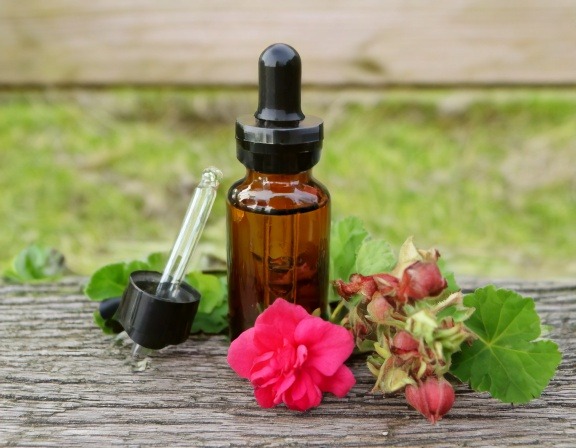
- 1 drop Geranium Essential Oil (look for Rose geranium oil or Egyptian geranium varieties)
Stir or swirl gently. That’s it. Geranium essential oil offers powerful anti-inflammatory properties to reduce redness and swelling. These anti-inflammatory effects, combined with its antibacterial and antimicrobial properties, provide protective benefits for active pimples. If you want to explore acne-focused essential oil combinations later, use established recipe guidance as inspiration and keep your facial dilution low, like this essential oil recipe guidance for acne-prone skin.
How to apply without making it angry:
Wash your hands first. Cleanse your face with something mild and pat dry. Then use a clean cotton swab to tap the blend onto the blemish, not the whole area around it. Let it sink in before moisturizer.
Use it once a day at first. If your skin stays calm for several days, you can move to twice a day, but don’t chase results by reapplying every few hours. That’s when you start getting dryness and flaking, and flaky skin can trap oil and dead cells.
If the blemish is already open or scabbed, skip essential oils. At that stage, your skin needs gentle protection, not botanicals.
When to avoid geranium essential oil on breakouts
There are times when the safest choice is to skip it, even if it worked for someone else.
Avoid or get professional guidance if:
- You’re pregnant or nursing, dealing with PMS symptoms, menopause, or menopausal symptoms (consult a professional due to potential hormone-like effects on estrogen levels), or using essential oils on a child.
- You have a history of allergic reactions, eczema flares, or very reactive skin.
- You’re on a prescription acne routine and your clinician warned against irritants.
- The breakout is painful, spreading, or looks infected (heat, pus, increasing redness).
- You’re trying to treat the same spot for weeks and it keeps returning, that can be a cyst or something that needs a different approach.
If you want a deeper look at general precautions and contraindications discussed in aromatherapy circles, see New Directions Aromatics’ safety notes on geranium oil. It’s not a substitute for medical advice, but it can help you think through whether now is the right time to experiment.
Conclusion
Geranium essential oil, obtained through steam distillation for optimal quality, offers key chemical constituents like geraniol, linalool, and citronellol that make it effective for skin concerns. It can be a nice option for hormonal breakouts when you treat Geranium essential oil like a strong ingredient, not a quick fix, supporting overall hormonal balance. Keep the dilution low, apply it cleanly, and give your skin time to respond; it may even help reduce fine lines as a secondary benefit. The best routine is the one you can repeat without irritation, and that starts with a patch test. If your breakouts are deep, frequent, or leaving marks, it’s worth pairing gentle home care with professional support.
Stay Connected for More Natural Living Inspiration
If you enjoyed this post about herbal wellness and love discovering natural ways to refresh your home and wellness, don’t miss out on future recipes and clean-living tips! Subscribe to the blog for weekly DIYs, wellness inspiration, and herbal remedies delivered straight to your inbox.
Don’t forget to visit my LinkTree for the links to my favorite essential oils, herbal teas, natural recipes, YouTube ambiance videos for sleeping; a project I created to help with insomnia symptoms and the second channel, Rooted in Nature YouTube Channel both channels feature herbal recipes for wellness and home.
Thanks for coming by!

Leave a Reply