
(DISCLAIMER: I am not a doctor, and you should consult your healthcare professional before starting any health regimen.)

Key Takeaways
- Rose essential oil is highly concentrated, a little goes a long way.
- Many people use it for mood support, stress relief, and a bedtime wind-down.
- Rose otto and rose absolute aren’t the same, and they behave differently in diffusers.
- Start small with diffusing and always dilute for skin use.
- If you’re sensitive to scent (or have pets), extra caution matters.
Rose has a way of making a room feel softer. One breath can feel like pulling a warm blanket up to your chin, comforting, floral, and a little nostalgic. That’s why rose essential oil stays on so many aromatherapy shelves, even though it’s one of the pricier oils out there.
In this post, you’ll learn what rose essential oil is, how people use it in aromatherapy, which benefits show up most often (in real life, not in perfect lab conditions), and the simple safety basics that keep it enjoyable.
What rose essential oil is, and why aromatherapy uses it
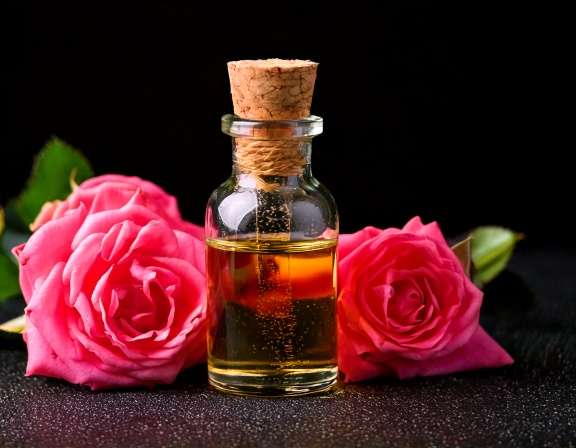
Rose essential oil is a concentrated plant extract that captures the scent compounds found in rose petals. Most true rose essential oil (often called rose otto) is made through steam distillation, where steam passes through petals and carries aromatic molecules into a cooled collection system.
Because it takes a huge amount of petals to produce a tiny bottle, rose oil costs more than many other essential oils. Think of it like making a strong tea, except you’d need baskets of petals just to get a small amount of aromatic “essence.”
You’ll commonly see two rose species listed on labels:
- Rosa damascena (often the classic “Damask rose” used for rose otto)
- Rosa centifolia (often used for rose absolute)
So why does aromatherapy love rose? Because scent hits fast. When you inhale an aroma, scent molecules travel up to your olfactory system and send signals to parts of the brain linked with emotion, memory, and stress response. That doesn’t mean the oil “treats” a condition, but it helps explain why certain scents can feel grounding, soothing, or uplifting within minutes.
Rose is often used when someone wants a gentle nudge toward calm. It’s also a favorite for self-care routines because it feels special, even in small doses.
Rose otto vs rose absolute, which one is best for diffusers?
Rose otto is steam-distilled. It’s usually the safer, cleaner choice for diffusing because it’s produced without solvents. The scent can feel fresh, soft, and slightly green.
Rose absolute is typically solvent-extracted. It often smells deeper, warmer, and more “perfume-like.” Absolutes can be beautiful, but many people prefer not to diffuse them often, especially if they’re sensitive, because solvent traces are a concern (quality varies by brand).
A simple buying tip that saves headaches: check the label for the Latin name, look for batch testing (GC/MS is a common term you’ll see), and avoid bottles that say “rose fragrance” or “perfume oil.” That usually means it’s not pure essential oil.
What rose essential oil smells like, and why that matters for blending
Rose can smell floral and sweet, but not always powdery. Good rose often has a fresh petal feel, a soft green edge, and sometimes a honey-like warmth.
If you’ve heard people talk about top, middle, and base notes, here’s the simple version: top notes smell first and fade fast, base notes linger, and middle notes hold the blend together. Rose is usually treated like a middle note, so it helps blends feel rounded instead of sharp.
Easy blend partners (and the kind of mood they tend to support):
- Lavender: cozy calm, great for decompressing
- Bergamot: brighter mood, less heavy
- Frankincense: quiet, steady, “exhale” energy
- Geranium: rosy and green, balanced and comforting
- Sandalwood: smooth, warm, slow-down vibes
- Ylang-ylang: rich floral, sensual, relaxing
If you like collecting diffuser ideas, this post has simple combos you can adapt by adding a single drop of rose: Allergy-fighting essential oil diffuser blend
Rose essential oil benefits in aromatherapy (what people use it for most)
When people talk about rose essential oil benefits in aromatherapy, they’re usually talking about how it feels to use, not a guaranteed outcome. Rose isn’t a magic switch, but it’s a scent many people return to when life feels loud.
Aromatherapy benefits are also personal. Your stress level, sleep habits, hormone shifts, and even what you associate with roses can change how it lands for you. Some small studies on scent and stress response suggest certain aromas may influence relaxation markers, but results are mixed and often depend on the person, the setting, and the dose.
In everyday use, rose is popular because it supports routines that help you slow down: breathing, journaling, stretching, or turning your bedroom into a calmer space. That’s a real benefit, even if it’s hard to measure.
Below are the most common ways people use rose oil in aromatherapy, plus practical routines you can try without wasting half the bottle.
Stress relief and a calmer mood (great for tough days)
Rose is often used for emotional comfort. It’s the scent version of a steady hand on your shoulder, not pushy, not sharp, just soft.
Many people find rose helpful when they feel tense, snappy, overstimulated, or just worn out. If that’s you, keep the dose low. Rose can feel intense fast, especially in small rooms.
A simple 10-minute reset diffuser routine:
- Add 1 drop of rose plus 2 drops of lavender (or frankincense).
- Set a timer for 10 minutes.
- Try this breathing pattern: inhale for 4, hold for 2, exhale for 6, repeat for a few rounds.
If you notice a headache or that “too much perfume” feeling, stop and air out the room. Aromatherapy should feel supportive, not overwhelming.
Sleep support and bedtime wind-down routines
Rose fits nicely into nighttime because it feels warm and reassuring. For many people, the biggest sleep benefit is that it becomes a cue: your brain starts linking that scent with slowing down.
Two easy options:
1) Bedtime diffuser blend
- 1 drop Rose Essential Oil
- 2 drops Lavender Essential Oil
- 1 drop Sandalwood Essential Oil(optional, but extra cozy)
Diffuse for 20 minutes while you wash your face or read, then turn it off.
2) Simple pillow spray (fabric only)In a 2-ounce spray bottle, combine water with a small amount of alcohol (like vodka) or a proper solubilizer, so the oil disperses better. Add 1 drop rose and 2 drops lavender, shake hard before each use, then lightly mist bedding (not your skin).
Patch test anything that might touch sensitive skin, and keep sprays away from pets’ bedding.
Self-confidence, romance, and feeling more like yourself
Rose is sometimes called a “heart” scent, not because it fixes anything, but because it helps you drop back into your body. People use it for self-kindness, intimacy, and that “I want to feel like me again” mood.
I like it before a date, or when I need a boost, especially on days when I’m overthinking everything.
Quick roll-on idea (10 ml bottle):
- Fill with jojoba or fractionated coconut oil.
- Add 2 drops rose total (that’s about a 1 percent dilution).
- Optional: add 2 drops bergamot for a lighter, happier vibe.
Apply to wrists or the back of your neck, then pause and take a slow breath. It’s simple, but it changes the tone of the moment.
How to use rose essential oil safely at home (diffusers, inhalers, skin use)
Rose oil is potent. It’s also expensive, which is another reason to use less than you think you need. The goal is a gentle scent cloud, not a wall of perfume.
A few general rules that keep things safer:
- Use short sessions, not all-day diffusing.
- For skin use, dilute every time, no exceptions.
- Keep oils away from eyes, lips, and broken skin.
- Store bottles tightly closed, away from heat and sunlight.
If you want a broader safety refresher for building a simple home oil stash, this guide is a good bookmark: First-aid kit essential oil essentials
Diffusing rose oil without overdoing it
Start with the smallest amount and work up only if needed. Rose can fill a space fast.
Drop ranges by room size:
- Small room (bathroom, office): 1 drop rose (total 2 to 3 drops of all oils)
- Medium room (bedroom): 1 drop rose (total 3 to 5 drops)
- Large room (open living area): 1 to 2 drops rose (total 5 to 7 drops)
Time limits help a lot:
- Diffuse 20 to 30 minutes, then take a break.
- Crack a door or window if the scent feels heavy.
If you have pets, keep the space ventilated and give them a clear exit route. Cats are often more sensitive to essential oils, so be extra careful.
Skin and bath safety (dilution, patch tests, and carrier oils)
Never use rose oil neat (undiluted). Even oils that feel “gentle” can irritate skin, and rose is highly concentrated.
Easy dilution examples:
- 1 percent: 1 drop essential oil per 1 teaspoon carrier oil (5 ml)
- 2 percent: 2 drops essential oil per 1 teaspoon carrier oil
Good carrier oils for rose:
- Jojoba (light and stable)
- Sweet almond (softens skin, nice slip)
- Fractionated coconut (light, less greasy)
Patch test by applying a tiny amount to your inner forearm and waiting 24 hours. If you get redness, itching, or burning, don’t use it.
For baths, don’t add essential oils straight into water. Oil and water don’t mix, so the drops can sit on top and hit your skin in one strong spot. Mix rose into a dispersant first, like a tablespoon of carrier oil or unscented liquid soap, then add to the bath.
Who should avoid rose essential oil, or ask a pro first
Some people should skip rose oil, or talk with a qualified clinician first:
- Pregnancy or nursing (get personalized guidance)
- Babies and young kids
- Asthma or strong scent-triggered reactions
- Migraine triggers
- Very allergy-prone or reactive skin
- Homes with pets, especially cats
Stop using rose oil if you feel nauseous, dizzy, or get a headache. Fresh air and a break usually help.
Conclusion
Rose essential oil earns its reputation in aromatherapy because it can make your space feel calmer, warmer, and more personal. Many people reach for it to support a steadier mood, an easier bedtime routine, and self-care that feels a little more special than usual.
Keep it simple: start with one drop, use short diffuser sessions, and treat skin dilution like a non-negotiable. If you keep notes on blends you love, you’ll waste less oil and build a routine that actually fits your life.
Try one rose essential oil diffuser blend tonight, then come back and share what you noticed in the comments.
Stay Connected for More Natural Living Inspiration
If you enjoyed this post about herbal wellness and love discovering natural ways to refresh your home and wellness, don’t miss out on future recipes and clean-living tips! Subscribe to the blog for weekly DIYs, wellness inspiration, and herbal remedies delivered straight to your inbox.
Don’t forget to visit my Amazon storefront for the links to my favorite essential oils, herbal teas, and natural recipes. I also create YouTube ambiance videos for sleeping; a channel I created to help people who have trouble sleeping. The link to all social media content is here.
Thanks for coming by!

Leave a Reply