
(DISCLAIMER: I am not a doctor, and you should consult your healthcare professional before starting any health regimen. Product links are commissioned and supports the blog)

Key Takeaways
- For most adults, the safest everyday range for a leave-on body oil is 1 to 2 percent dilution.
- In simple terms, that means 6 to 12 drops per 1 ounce (30 mL) of carrier oil.
- Use 1 percent for sensitive skin, daily use, or if you are new to essential oils.
- Use 2 percent for general body oil use, such as massage or dry body areas.
- If you blend turmeric essential oil with other essential oils, all drops count toward the total dilution.
- Always do a patch test first.
- Turmeric essential oil may leave a temporary yellow tint, so use a light hand.
- Keep it away from eyes, lips, and broken skin.
A simple body oil can feel like a small comfort at the end of the day. When your skin feels dry, dull, or a little tight, a well-diluted blend can add slip, softness, and a warm herbal scent without much fuss.
That is where turmeric essential oil often finds a place. People use it in body care because it may help skin feel calmer, look brighter, and pair well with a short massage routine. Still, it is a potent essential oil, so the best approach is a careful one. Simple ratios matter more than fancy formulas, and that is what makes homemade body oil both safer and easier.
Why turmeric essential oil works well in DIY body oils
Turmeric essential oil has a warm, earthy scent and a reputation for supportive skin care. In body oils, people often choose it for its soothing feel and its link to antioxidant-rich plant compounds. That does not mean instant results, and it does not replace medical care. It does mean it can be a thoughtful addition to a simple routine.
When diluted in a carrier oil, turmeric essential oil may help dry or stressed skin feel more comfortable. Some people also like it in blends meant to support a more even, fresh-looking tone. The effect is usually modest, not dramatic, but many readers prefer gentle support over harsh products that strip the skin.
It also works well in massage oils. After a workout or a long day on your feet, a body oil with turmeric essential oil can add glide and warmth to the skin. That sensory side matters. Sometimes a product earns its place because it feels pleasant enough to use often.
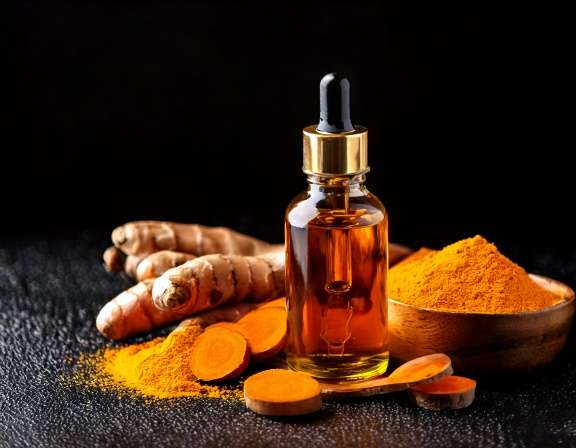
Turmeric essential oil belongs in a carrier oil first, not directly on skin.
Skin benefits readers care about most
Most people are not looking for miracles. They want skin that looks less dull and feels less dry. Turmeric essential oil is often used with those goals in mind.
Because it is associated with soothing and antioxidant activity, it may help skin look calmer when mild redness or roughness is part of the picture. It may also support a healthier-looking glow over time, especially when paired with moisturizing carrier oils. If your skin looks uneven or tired, a consistent body oil routine can help the surface look smoother and more supple.
That said, body oils do not erase dark spots or treat skin disease. They support the skin barrier and improve feel and appearance in a gentle way.
When a body oil blend makes more sense than using lotion
Body oil is especially useful right after a shower, when skin is still slightly damp. At that point, it helps seal in water and can leave skin feeling soft without a heavy coat.
It also makes sense for massage, since lotion often disappears too fast. For very dry spots like elbows, shins, knees, and forearms, a body oil can feel richer and last longer. If you dislike sticky creams, a lighter oil blend may be easier to keep using.
Simple turmeric essential oil ratios, without the guesswork
Dilution sounds technical, but the idea is simple. You are blending a small amount of essential oil into a much larger amount of carrier oil. For turmeric essential oil body blends, 1 percent and 2 percent are the sweet spot for most adults.
A 1 percent dilution is better for daily use, sensitive skin, or anyone trying turmeric essential oil for the first time. A 2 percent dilution is a common choice for body massage oils and regular body care. Going stronger is not better for a leave-on body oil. In fact, more drops can raise the risk of irritation.
Here is the easiest way to remember it:
- 1 ounce (30 mL) = 6 drops for 1 percent, 12 drops for 2 percent
- 2 ounces (60 mL) = 12 drops for 1 percent, 24 drops for 2 percent
- 4 ounces (120 mL) = 24 drops for 1 percent, 48 drops for 2 percent
If you add other essential oils, count every drop in the total. For example, a 2-ounce body oil at 2 percent allows 24 total drops. That could be 12 drops turmeric essential oil, 8 drops lavender, and 4 drops frankincense. The total is still 24.
For extra-sensitive skin, or for face products, keep the blend at 0.5 to 1 percent. This article stays focused on body oils, where 1 to 2 percent is the usual range.
The easiest dilution chart for 1 oz, 2 oz, and 4 oz bottles
Use this chart when you want a quick answer at the bottle.
| Bottle size | 1% dilution | 2% dilution |
|---|---|---|
| 1 oz (30 mL) | 6 drops total | 12 drops total |
| 2 oz (60 mL) | 12 drops total | 24 drops total |
| 4 oz (120 mL) | 24 drops total | 48 drops total |
That is the main rule most home users need. If you are making a face oil or you know your skin reacts easily, stay closer to 0.5 to 1 percent.
Best carrier oils to pair with turmeric essential oil
Carrier oils shape how a body oil feels on the skin, so this choice matters almost as much as the essential oil itself.
Jojoba oil feels balanced and smooth. It suits many skin types and absorbs well, so it is a good first pick for daily use.
Sweet almond oil is a classic massage oil. It has more slip, which helps if you want time to work the blend into shoulders, legs, or arms.
Fractionated coconut oil feels light and clean. It spreads easily, sinks in fast, and works well if you dislike a heavy finish.
Argan oil feels richer but still elegant. It is useful in small body blends for rough elbows, dry arms, or areas that need extra softness.
Three easy body oil recipes with turmeric essential oil
These blends keep the math simple and the formulas realistic. If you are new to essential oils, start at the lower end of the drop range and see how your skin responds.
Everyday glow body oil for daily use
This is a gentle 1 percent blend for regular use after a shower.
You need:
- 2 oz jojoba oil
- 12 drops turmeric essential oil
- 1/4 teaspoon vitamin E oil (optional)
How to make it:
- Pour the jojoba oil into a clean 2-ounce dark glass bottle.
- Add the turmeric essential oil, then add vitamin E if using.
- Cap the bottle and roll it between your hands to mix.
- Apply a small amount to damp skin after bathing.
This blend is simple on purpose. Jojoba helps it feel neat and light, while vitamin E can support shelf life and skin feel.
Soothing massage oil for tired muscles
This body-only blend uses a 2 percent dilution and gives enough slip for massage.
You need:
- 2 oz sweet almond oil
- 12 drops turmeric essential oil
- 8 drops lavender essential oil
- 4 drops frankincense essential oil
How to make it:
- Add the sweet almond oil to a clean 2-ounce bottle.
- Add all essential oils. The total is 24 drops, which equals 2 percent.
- Close the bottle and shake gently.
- Massage a small amount into shoulders, calves, legs, or arms.
Turmeric essential oil stays central here, while lavender softens the scent and frankincense rounds it out. Keep this blend for body use only, not the face.
Lightweight dry skin oil for elbows, legs, and arms
If you want a quicker finish, this blend uses fast-absorbing carriers and a steady, body-safe ratio.
You need:
- 1 1/2 oz fractionated coconut oil
- 1/2 oz argan oil
- 12 drops turmeric essential oil
How to make it:
- Combine both carrier oils in a clean 2-ounce bottle.
- Add the turmeric essential oil.
- Cap the bottle and shake for several seconds.
- Rub a small amount into dry areas, especially elbows, legs, and forearms.
This formula lands at 1 percent in a 2-ounce bottle, so it is a good everyday option. Rub it in well, then give it a minute before dressing. Turmeric may leave a faint yellow tint if you apply too much.
Safety tips that help you use turmeric essential oil with confidence
Turmeric essential oil is useful, but restraint matters. Start low, especially if your skin is reactive or you are trying a new brand. More drops do not guarantee better results, and overuse can irritate skin.
Keep the oil away from eyes, inner nose, lips, and broken skin. Wash your hands after applying a blend, especially before touching your face or clothing. For storage, use a dark glass bottle and keep it away from heat, light, and steam from the shower. That helps preserve freshness.
Some people should take extra care. Children need lower dilutions. Pregnancy, nursing, certain skin conditions, and some health concerns call for more caution as well. If you are unsure, ask a qualified healthcare professional or trained aromatherapist before regular use.
How to patch test and avoid staining
Patch testing takes a day, but it is worth it. Mix your body oil first, then apply a small amount to the inner forearm. Leave the area alone and wait 24 hours. If you notice itching, burning, swelling, or a rash, wash it off and do not keep using that blend.
To reduce the chance of staining, start with fewer drops and apply a thin layer. Wash your hands after use, and let the oil sink in before putting on light-colored clothes. A little patience helps here.
The simplest blend is often the best one
A good turmeric body oil does not need a long ingredient list. What matters most is a safe dilution, a carrier oil your skin likes, and a routine you will keep using.
If you want the easiest place to start, make a 1-ounce bottle at 1 percent. That means 6 drops of turmeric essential oil in 1 ounce of carrier oil. Use it on damp skin, watch how your skin responds, and adjust slowly if needed. Gentle, steady use usually tells you more than an overbuilt blend ever will.
Stay Connected for More Natural Living Inspiration
If you enjoyed this post about herbal wellness and love discovering natural ways to refresh your home and wellness, don’t miss out on future recipes and clean-living tips! Subscribe to the blog for weekly DIYs, wellness inspiration, and herbal remedies delivered straight to your inbox.
Don’t forget to visit my Amazon storefront for the links to my favorite essential oils, herbal teas, and natural recipes. I also create YouTube ambiance videos for sleeping; a channel I created to help people who have trouble sleeping. The link to all social media content is here.
Thanks for coming by!

Leave a Reply