(DISCLAIMER: I am not a doctor, and you should consult your healthcare professional before starting any health regimen.)

Key Takeaways:
- Bathroom odors usually come from moisture, drains, towels, and trapped air, not just the toilet.
- A toilet pre-spray works best when you spray into the bowl first, so odor gets trapped before it spreads.
- A room spray needs a mixing helper (like alcohol or witch hazel) or it’ll separate fast, that’s normal.
- Diffuser blends using essential oils work best in short bursts, paired with basic cleanup and airflow.
That “why does it still smell in here?” moment can happen even in a clean bathroom. The room is small, damp, and full of fabric that holds onto smells. Essential oils provide a natural way to manage moisture-related bathroom odors. Add a slow fan or a closed door, and odors hang around longer than they should.
The good news is DIY recipes for natural air freshener options can help a lot, if you use them in the right form. A bowl spray, a true room spray, and a simple diffuser routine each handle odor in a different way. Below are the ones that actually pull their weight.
Why bathroom odors cling (and the oils that fight back)
Bathroom smells are stubborn because the space is basically built to trap them. Warm showers create humidity, humidity sticks to walls and grout, and moisture feeds odor-causing microbes. Towels and bath mats act like scent sponges. Even if the toilet is spotless, drains, trash cans, and damp corners can keep the smell going.
Before you add scent, handle the basics first. Essential oils work best as the “fresh finish,” not a cover-up for a hidden mess.
A quick, realistic checklist for cleaning the bathroom:
- Run the fan during showers and for 15 to 20 minutes after.
- Wash towels and bath mats more often than you think you need.
- Empty the trash, especially if you toss floss, wipes, or cotton rounds.
- Pour hot (not boiling) water down the sink and tub drain weekly to help move gunk along.
- Follow up drains with white vinegar and baking soda weekly to fizz away stubborn buildup.
Now for oils. Essential oils banish bad smells through aromatherapy in a chemical-free manner. For bathroom funk, you want oils that smell clean and sharp, not heavy and sweet. These are the workhorses with antibacterial properties and antifungal effects:
- Lemon essential oil: bright, “just cleaned” scent that cuts stale air.
- Tea tree oil: smells medicinal, but it’s great for that “fresh and sanitary” vibe.
- Eucalyptus essential oil: crisp, spa-like, especially after showers.
- Lavender essential oil: softens harsher oils and makes blends feel calmer.
- Lemongrass essential oil: strong and deodorizing, use a lighter hand.
- Peppermint essential oil: powerful, cool, and quick to take over a room.
If you want more options for freshening and cleaning support, keep this list handy: Top antibacterial essential oils for cleaning. It’s a solid guide when you’re choosing oils that smell good and feel “clean,” especially for bathrooms.
One more important note: essential oils are strong. If you have pets (especially cats), babies, asthma, or migraine triggers in the home, go lighter, diffuse for shorter times, and skip oils that feel irritating.
Bathroom Room Spray Recipes (Toilet Spray and True Room Spray)
There are two sprays that matter here, and they do different jobs. A toilet spray goes into the bowl before you go. A room spray is for the air and soft surfaces after the fact.
Toilet “Before You Go” Spray (Works Like a Lid on Odor)
This style works because essential oils float on the water’s surface and help trap odor before it escapes. The method is the magic in these DIY recipes.
A helpful example of the concept is this natural toilet odor spray method, which explains why spraying the bowl first makes such a difference.
Simple Toilet Pre-Spray (2 oz Spray Bottle)
- 2 oz spray bottle
- 1 tablespoon high-proof alcohol (like vodka) to help mix
- Fill the rest with distilled water
- 20 to 30 total drops essential oils
Blend ideas that don’t smell “too perfume-y”:
- Citrus Clean: 12 drops lemon essential oil, 6 drops tea tree oil, 6 drops lavender essential oil
- Minty Fresh: 10 drops peppermint essential oil, 10 drops lemon essential oil, 6 drops eucalyptus essential oil
- Herbal Crisp: 10 drops eucalyptus essential oil, 8 drops orange essential oil, 6 drops rosemary (optional, strong)
Shake before each use. Spray 3 to 5 times directly into the toilet bowl before you go.
True Room Spray (For the Air, Not the Bowl)
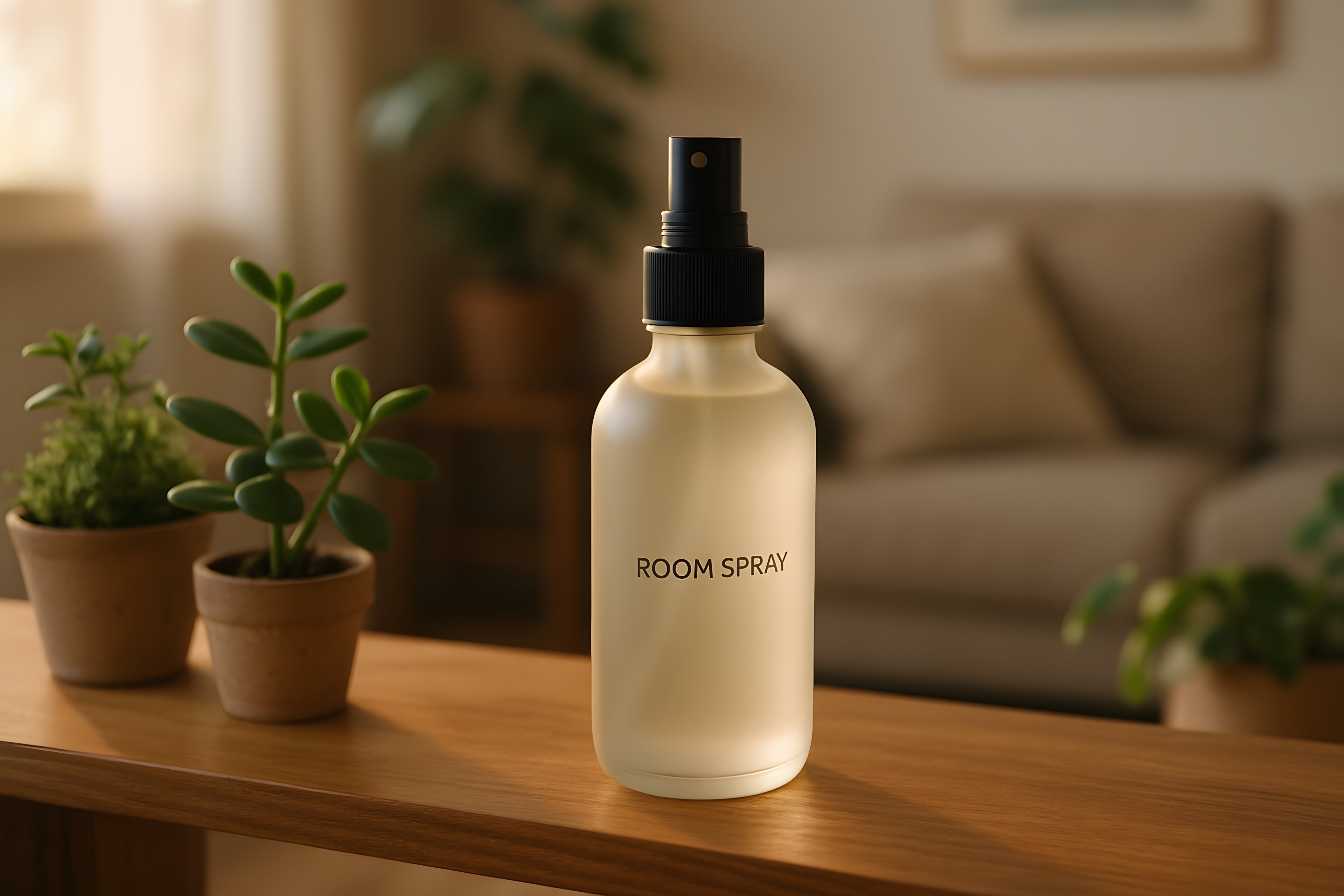
If you’ve tried essential oils in water and felt disappointed, it’s usually a mixing problem. Oil and water don’t stay blended for long. Alcohol or witch hazel helps distribute the oils so you get a more even mist. This makes an effective natural air freshener.
Mindbodygreen has a simple approach if you prefer minimal ingredients, see their two-ingredient DIY bathroom spray idea.
Everyday Bathroom Room Spray (4 oz Spray Bottle)
- 4 oz fine-mist spray bottle
- 1 to 2 tablespoons witch hazel or vodka
- Fill the rest with distilled water
- 30 to 45 total drops essential oils
Reliable blends:
- After-Shower Spa: 18 drops eucalyptus essential oil, 12 drops lavender essential oil, 6 drops orange essential oil
- Quick Reset: 20 drops orange essential oil, 15 drops lemon essential oil, 5 drops peppermint essential oil
- Fresh Linen (not sweet): 15 drops lavender essential oil, 15 drops lemon essential oil, 10 drops tea tree oil
Spray this room spray into the air, then do 1 to 2 light mists toward towels or a bath mat from a distance. Don’t soak fabric. If your bathroom has stone floors, be careful with overspray since some essential oils can make surfaces slick.
Diffuser blends that clear the air (without smelling like a candle aisle)
Diffuser blends offer the easiest way to keep a bathroom smelling fresh day to day with essential oils, but timing matters. In a small space, diffusing for hours can be too much. Short bursts work better, and they won’t overwhelm the next person who walks in.
A good rhythm:
- Diffuse 10 to 20 minutes in the morning.
- Diffuse 10 minutes after showers.
- Diffuse 10 minutes after “high odor” use, with the fan on.
Most drop counts below are for a 100 ml diffuser using essential oils. If your diffuser is 200 ml, you can scale up a little, but don’t double it right away. Bathrooms are small.
Three diffuser blends that actually work in bathrooms
1) Bright Clean Air
- 4 drops Lemon Essential Oil
- 3 Grapefruit Essential Oil
- 2 Tea Tree Essential Oil
Smells like you wiped down the counters and opened a window.
2) Shower Steam (spa vibe)
- 4 drops Eucalyptus Essential Oil
- 3 drops Lavender Essential Oil
- 1 drop Peppermint Essential Oil
This is strong and creates a luxury spa smell through the power of aromatherapy. If peppermint takes over, drop it completely next time.
3) Herbal Reset (for lingering musty smells)
- 3 drops Lemongrass Essential Oil
- 3 drops Lemon Essential Oil
- 2 Lavender Essential Oil
Lemongrass is intense, but it’s great when a bathroom smells damp.
Placement tip: set the diffuser away from the toilet and closer to airflow, like near the door or under the fan path, if possible. You want scent to circulate, not sit in one corner. For extra disinfectant support as part of cleaning the bathroom naturally, add a cotton ball soaked in tea tree oil or cedarwood to the bottom of the trash can.
If you like using the diffuser for wellness too (not just odor control), this post has nice combos you can borrow and tweak: Allergy-relief diffuser blend recipe.
And if you enjoy simple, natural home scent routines beyond the bathroom, Mountain Rose Herbs shares good ideas in tips for a fresh-smelling home.
Conclusion
Controlling bathroom odors gets easier when you stop trying to solve everything with one product. Harness essential oils through a toilet pre-spray to trap smells, a true room spray for quick touch-ups, and diffuser blends in short bursts for steady freshness. Once you find your favorite combo of room spray and diffuser blends, keep the bottles where you’ll actually use them, not tucked under the sink. Build a natural air freshener routine that replaces synthetic alternatives and keeps the air fresh and clean. The goal isn’t “strong scent,” it’s fresh air that feels clean.
Stay Connected for More Natural Living Inspiration
If you enjoyed this post about herbal wellness and love discovering natural ways to refresh your home and wellness, don’t miss out on future recipes and clean-living tips! Subscribe to the blog for weekly DIYs, wellness inspiration, and herbal remedies delivered straight to your inbox.
Don’t forget to visit my LinkTree for the links to my favorite essential oils, herbal teas, natural recipes, YouTube ambiance videos for sleeping; a project I created to help with insomnia symptoms and the second channel, Rooted in Nature YouTube Channel both channels feature herbal recipes for wellness and home.
Thanks for coming by!

Leave a Reply