
(DISCLAIMER: I am not a doctor, and you should consult your healthcare professional before starting any health regimen.)

After a long afternoon outdoors, your skin may feel warm, tight, dry, or tender beneath the surface. That discomfort can make a rich natural oil seem appealing, but carrot seed essential oil needs extra care when your skin barrier feels stressed.
This concentrated oil belongs in a diluted cosmetic blend, not on a fresh sunburn. It isn’t sunscreen, it won’t prevent UV damage, and it can’t repair burned skin. For intact facial skin, a cautious 0.5% to 1% dilution is the better starting point. The guide below covers dilution math, patch testing, sun precautions, and three simple recipes.
Key Takeaways
- Carrot seed essential oil isn’t a replacement for broad-spectrum sunscreen.
- Use about 0.5% to 1% for facial products on dry, sun-stressed, or sensitive skin.
- This equals about 3 to 6 drops per 30 mL, or 1 to 2 drops per teaspoon.
- Never apply the essential oil undiluted.
- Patch test before facial use.
- Avoid the eyes, broken skin, blisters, peeling areas, and fresh sunburn.
- Stop if burning, itching, swelling, or a rash develops.
- Seek medical care for blistering, severe pain, spreading swelling, infection signs, or heat illness symptoms.
Carrot Seed Essential Oil for Sun-Stressed Skin Safe Dilution Guide
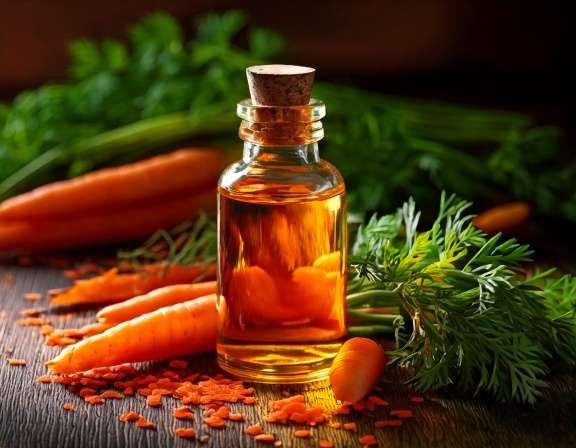
Carrot seed essential oil is a volatile, highly concentrated oil distilled from carrot seeds. Its earthy, dry aroma is different from the ingredients sold as carrot seed carrier oil, carrot root oil, or carrot-infused oil.
Carrot seed carrier oil is a fixed vegetable oil. Carrot-infused oil is another carrier oil, such as sunflower oil, infused with carrot plant material. These products are not interchangeable with the essential oil. Check the label carefully before mixing a recipe.
A carrier oil spreads the essential oil across the skin and reduces the amount that touches any one spot. Suitable options include jojoba oil, squalane, apricot kernel oil, and fractionated coconut oil. An unscented moisturizer can also carry a tiny amount for single-use application.
For sun-stressed facial skin, stay around 0.5% to 1%. That range is more cautious than the general 2% adult dilution often found in essential-oil charts. It suits skin that feels dry, tight, tender, or more reactive than usual.
Research does not support carrot seed essential oil as a standalone sunscreen. It hasn’t been shown to prevent sunburn, block all harmful UV exposure, prevent skin cancer, or reverse sun damage. Any blend containing it still needs daily sun protection.
Drop counts are estimates because droppers release different-sized drops. A digital scale and a measured formulation provide better accuracy, especially when you make products regularly.
A lower dilution doesn’t make an essential oil harmless. It only reduces exposure, so intact skin, patch testing, and careful observation still matter.
What carrot seed essential oil may offer, and what it cannot do
When diluted in a plain carrier, carrot seed essential oil can add an earthy scent to a simple moisturizing routine. Some people also enjoy the feel of a light facial or body oil after cleansing.
Those are cosmetic uses. Traditional claims about “healing,” sun protection, or skin repair aren’t the same as proven medical benefits. WebMD notes that carrot seed oil can irritate skin and that evidence doesn’t support using it alone as sunscreen.
Sun-stressed skin may have a weakened outer barrier. Therefore, a bland moisturizer without essential oils can be a better first choice, especially when the skin feels hot, painful, peeling, or raw. Carrot seed essential oil cannot repair a sunburn or reverse UV injury.
Why the safest facial dilution stays low
General adult dilution charts often mention 2% for routine body products. Facial skin usually needs less, and recently sun-exposed skin may need less again. A 2% blend isn’t the right default for a tender face.
Use these approximate conversions as a quick reference:
- 1 drop in 1 teaspoon, about 5 mL, is roughly 1%.
- 3 drops in 30 mL is roughly 0.5%.
- 6 drops in 30 mL is roughly 1%.
- 12 drops in 30 mL is roughly 2%, which isn’t the default for irritated facial skin.
These counts assume a typical dropper. If your bottle releases large drops, the actual percentage may be higher.
How to Mix and Apply a Gentle Carrot Seed Essential Oil Blend
Start with a small batch instead of filling a large bottle. A 5 mL or 10 mL amber bottle is easier to monitor, and you won’t have to discard much if your skin dislikes the blend.
Wash your hands and use clean, dry equipment. Add the carrier first, then the measured essential oil. Close the bottle and roll it gently between your palms. Label it with the ingredients, dilution, and date. Store it away from heat and direct light.
Apply only a tiny amount to clean, moisturized, intact skin. Night use is the cautious choice because the blend offers no reliable UV protection. Press one or two drops over slightly damp skin rather than rubbing a heavy layer across your face.
Do not apply the blend to a fresh sunburn, blisters, peeling patches, cuts, abrasions, or open wounds. Avoid the eyelids, lash line, lips, and nostrils. For broader safe essential oil dilution tips, keep the same principle in mind: concentrated oils need a suitable carrier and a low starting percentage.
During daylight, use a broad-spectrum SPF 30 or higher and reapply it as directed on the label. A hat, sunglasses, tightly woven clothing, and shade add physical protection. Cover treated body skin when you’ll spend time outdoors, and don’t use the oil blend to extend time in the sun.
Choose a carrier oil that feels calm and comfortable
Jojoba and squalane suit people who prefer a light, low-grease finish. Apricot kernel oil feels softer and richer, while fractionated coconut oil stays light and spreads easily.
Olive oil may feel too heavy for some faces, particularly in warm weather. Choose one plain, fragrance-free carrier, and avoid adding several new ingredients at once. A simple formula makes it easier to identify the cause if irritation appears.
Patch test before using it on your face
Prepare a small diluted test blend at the same strength you plan to use. Apply a little to the inner forearm or behind the ear, then leave the area alone for 24 to 48 hours. If your skin reacts easily, observe it longer.
Never patch test undiluted carrot seed essential oil. A test lowers the chance of a surprise reaction, but it can’t guarantee that your face will tolerate the blend.
Redness, stinging, itching, swelling, warmth, or a rash means you should wash the area with mild soap and water and stop using the product. Don’t test another essential oil on the same irritated spot.
Three Simple Recipes for Dry, Sun-Stressed Skin
These small recipes are optional cosmetic blends for intact skin. They aren’t remedies for sunburn. Patch test every formula, even if you’ve used the carrier oil before.
A 0.5% carrot seed facial oil for a cautious first try
Ingredients
- 1 teaspoon, about 5 mL, jojoba or squalane
- 1 drop carrot seed essential oil
Add the carrier oil to a clean small bottle or a sanitized measuring spoon. Add one drop of essential oil and mix gently. This creates an approximate 0.5% facial blend by common drop-count estimates.
After patch testing, apply one or two drops to slightly damp skin at night. Keep the remainder in a cool, dark place and use clean hands each time. If the blend feels hot, stingy, or heavy, wash it off and return to an unscented moisturizer.
A 1% soothing body oil blend for dry arms and shoulders
Ingredients
- 2 tablespoons, about 30 mL, jojoba, apricot kernel, or fractionated coconut oil
- 6 drops carrot seed essential oil
Pour the carrier into a clean 30 mL amber bottle, add the essential oil, and gently rotate the bottle to combine. The result is approximately a 1% body blend.
Apply a small amount to intact skin after bathing while the skin is slightly damp. Don’t use it on a painful sunburn, blistered shoulder, or peeling area. During daytime exposure, cover treated skin and apply broad-spectrum SPF 30 or higher to exposed areas.
A fragrance-free moisturizer boost for occasional use
Ingredients
- 2 teaspoons unscented facial moisturizer
- 1 drop carrot seed essential oil
Mix the ingredients in your palm immediately before use. Don’t add essential oil to the whole moisturizer container, because that changes the original formula and makes the final concentration difficult to control. This single-use mixture is close to a low facial dilution.
Apply a thin layer to intact skin at night after patch testing. When your face feels hot, tender, peeling, or highly reactive, use the fragrance-free moisturizer alone. It may provide enough comfort without adding a scented ingredient.
Sun Exposure, Skin Reactions, and When to Skip Essential Oils
Guidance about sunlight after essential-oil use varies. Carrot seed essential oil isn’t proven to be phototoxic, but uncertainty is a good reason to stay cautious. Apply your blend at night, cover treated skin, and avoid intentional sun or UV exposure until the product has been washed off and your skin feels normal.
Ask a qualified clinician before using essential oils if you’re pregnant or breastfeeding. Extra advice is also appropriate for children, people with eczema or very sensitive skin, and anyone using prescription skin medicines. Some safety references advise avoiding carrot seed essential oil during pregnancy and breastfeeding unless a clinician specifically approves it.
Allergic reactions and irritation can appear after one use or after repeated exposure. Stop immediately if the skin burns, itches, swells, or develops a rash. Seek medical care for severe swelling, blistering, spreading redness, infection signs, significant pain, or symptoms of heat illness such as confusion, fainting, or persistent vomiting.
The difference between mild dryness and a real sunburn
Mild dryness may feel tight or rough without strong heat or pain. A sunburn commonly brings intense redness, warmth, tenderness, swelling, blistering, and later peeling.
Skip DIY oils when those symptoms appear. Use cool compresses, gentle cleansing, a plain moisturizer, and enough fluids. Never put essential oils on blistered, broken, or freshly burned skin. Severe pain, extensive blistering, worsening swelling, or signs of infection need professional medical advice.
A Safer Way to Use Carrot Seed Essential Oil
For facial use on sun-stressed skin, keep carrot seed essential oil around 0.5% to 1%. Use a plain carrier, patch test first, apply it only to intact skin, and treat the blend as a cosmetic moisturizer rather than sun protection.
Skin that feels warm or tender is asking for fewer ingredients, not a stronger formula. Broad-spectrum sunscreen, protective clothing, and gentle care matter more than any essential oil. If sun damage becomes severe or keeps worsening, seek medical attention rather than reaching for another DIY blend.
Stay Connected for More Natural Living Inspiration
If you enjoyed this post about herbal wellness and love discovering natural ways to refresh your home and wellness, don’t miss out on future recipes and clean-living tips! Subscribe to the blog for weekly DIYs, wellness inspiration, and herbal remedies delivered straight to your inbox.
Don’t forget to visit my Amazon storefront for the links to my favorite essential oils, herbal teas, and natural recipes. I also create YouTube ambiance videos for sleeping; a channel I created to help people who have trouble sleeping. The link to all social media content is here.
Thanks for coming by!
Leave a Reply