
(DISCLAIMER: I am not a doctor, and you should consult your healthcare professional before starting any health regimen.)

Key Takeaways:
- Sourced from peppercorn fruits, pink pepper oil is often used for mood, focus, and “fresh-spice” diffuser blends in aromatherapy.
- In massage oils, it may add a gentle warming feel and a cozy scent.
- In body oils, it can make simple routines feel more spa-like (with proper dilution).
- It’s not the same as black pepper oil, the aroma and plant source are different.
- Always dilute before skin use, and start low in a diffuser.
Pink pepper essential oil has a peppery, bright scent with a soft sweetness that makes a room feel clean and upbeat. As a middle note, it adds spice to blends without feeling heavy or smoky.
You’ll see it used in mood blends, post-workout massage mixes, skin feel routines, and home scenting. Just keep in mind, it’s potent like all essential oils, so a little goes a long way.
What Pink Pepper Essential Oil Is, and Why It Smells So Different
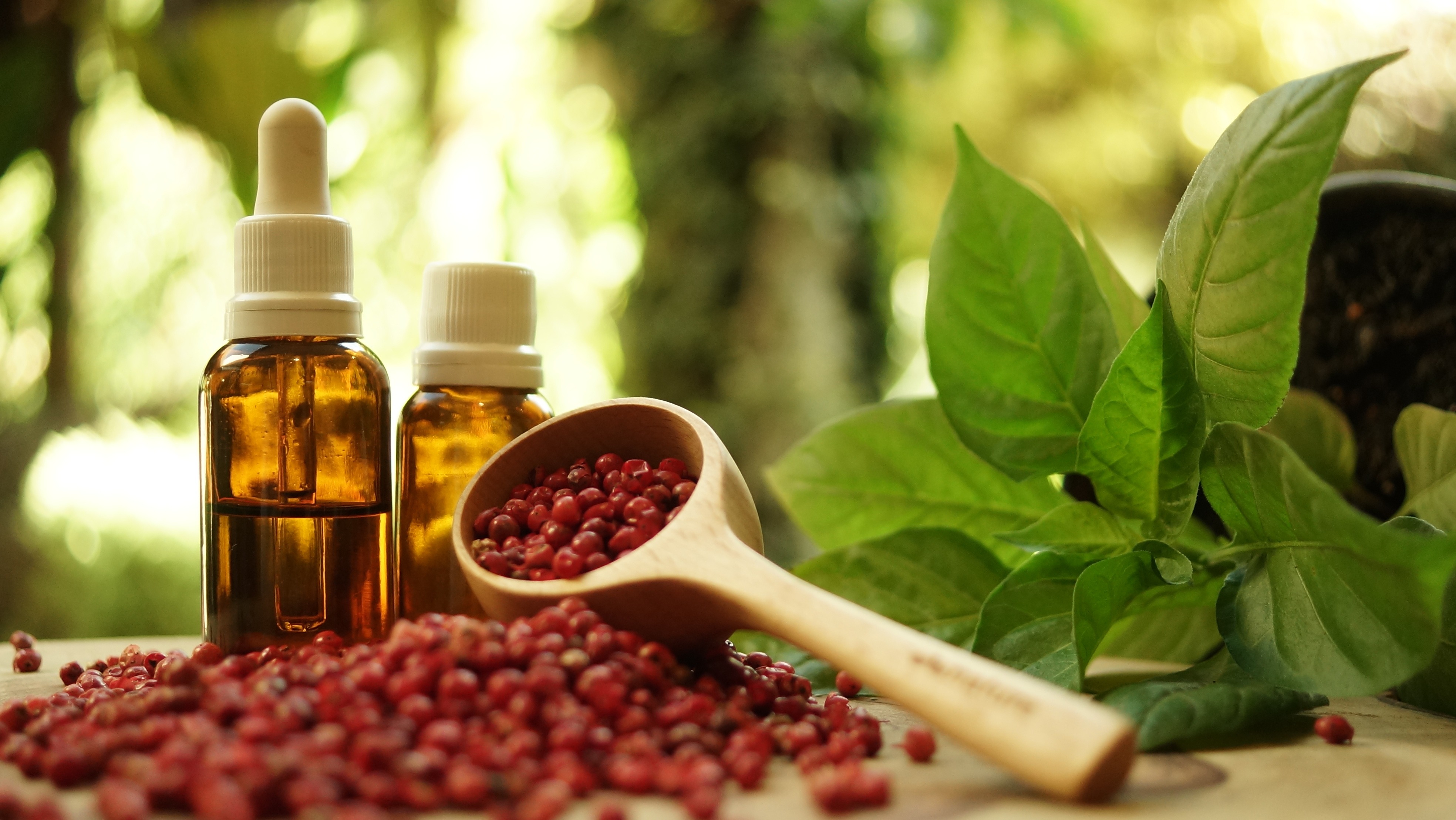
Pink pepper essential oil usually comes from the “pink peppercorn” plant, most often a Schinus species (such as the Peruvian Pepper Tree, Schinus molle, native to South America). Despite the name, pink peppercorns aren’t true pepper (they’re not Piper nigrum). That’s one reason the scent can surprise people.
The oil is commonly made by steam distillation of the peppercorn fruits (sometimes the dried berries sold as “peppercorns”). Steam distillation is basically a gentle way to lift aromatic compounds out of plant material using hot steam, then condense and separate the essential oil from the water.
So what does it smell like? Most people describe it as:
- Bright and peppery, without the sharp bite you might expect
- Slightly fruity and rosy with floral undertones, especially at first sniff
- Softly woodsy, once it settles down
It also blends well. If black pepper feels like a warm sweater, pink pepper feels like a crisp scarf, still spicy, but lighter and more playful.
Label names can be confusing, since “pink pepper,” “pink peppercorn,” and “Schinus” might all show up. If you’re shopping online, the scent description matters, but the botanical name matters more. Two bottles can both say “pink pepper” and still smell a bit different based on species, harvest, and where it was grown.
Pink pepper oil vs black pepper oil, are they interchangeable?
They’re not interchangeable in a strict sense, even though both are “pepper” in everyday language.
Botanical source:
- Pink pepper oil: Schinus species (not a true pepper plant)
- Black pepper oil: Piper nigrum (true pepper)
Scent and feel:
- Pink pepper tends to smell brighter, slightly sweet, sometimes fruity.
- Black pepper oil is usually deeper, drier, and more “warming spice cabinet.”
Typical uses (in everyday routines):
- Choose pink pepper when you want a fresh, uplifting spice note in perfumes, diffuser blends, and body oils.
- Choose black pepper when you want that classic warming spice vibe in muscle rub style blends (always diluted).
Clear takeaway: pink pepper is often the better pick for “bright spice,” black pepper suits “deep warming spice.”
What to look for when you buy it
If you want a bottle you’ll actually enjoy using, check for a few basics:
- Botanical name on the label (look for Schinus species).
- Country of origin (not required, but helpful for traceability).
- Purity statement (100% essential oil, no added fragrance oils).
- Batch number and testing info if it’s available (it’s a good sign, not a guarantee).
- Scent expectations: it should smell peppery-bright, not harsh, not “cologne-y.”
- Storage: keep it in a dark bottle, tight cap, cool place, away from sun and humidity.
If you plan on topical use, you’ll also want a good carrier oil on hand. This guide on carrier oil dilution ratios and safe usage makes choosing and mixing much easier.
Benefits people use pink pepper essential oil for (and what the research really suggests)
Pink pepper essential oil gets talked about like it’s a “do-everything” oil, but it helps to stay grounded. Most of what we know comes from traditional use—like support for the digestive system and respiratory system—user reports, and early research looking at the plant’s natural compounds.
In research settings, scientists often test essential oils for things like antioxidant properties, anti-inflammatory benefits, antibacterial and antifungal effects (usually in lab dishes), and potential immune system support. That can be interesting, but it’s not the same as proving a result on human skin or in real-life stress levels.
In everyday aromatherapy and body care, pink pepper is often used for:
- Mood support when you want something upbeat but not sugary
- Massage blends for post-workout comfort (mostly for scent and a warming feel)
- Skin feel in body oils, especially if you want a spicy, clean fragrance without synthetic perfume
- Home scenting for a fresh, modern “spice and citrus” vibe
One simple caution to keep things honest: many studies are lab-based, so treat the results as “potential,” not a promise.
Mood and focus support when you want something uplifting
Scent can change the tone of a room fast. Pink pepper’s bright-spice aroma interacts with the nervous system to relieve anxiety and make the air feel lighter and your mind more awake. It’s the kind of scent that works well for morning routines, cleaning days, or late-afternoon slumps.
A beginner-friendly diffuser idea:
- Start with 2 to 4 drops pink pepper in a water diffuser.
- Diffuse for 15 to 30 minutes, then take a break.
Try this simple diffuser blend (fresh, not too sweet):
- Pink pepper: 2 to 3 drops
- Sweet orange or bergamot: 2 to 3 drops
- Frankincense or cedarwood: 1 to 2 drops
If you like blends meant for attention and study time, this list of essential oils to enhance focus and mental clarity can help you pair pink pepper with oils that fit your vibe.
Post-workout comfort and tired muscle care in massage blends
After a workout, a warm shower and a quick massage can feel like hitting “reset.” Pink pepper essential oil shows up in massage blends for sore muscles because it supports blood circulation with a spicy-bright scent and antispasmodic, gently warming character that many people find comforting.
Keep the goal realistic: this is about comfort and routine, not treating injuries.
Here are two adult dilution examples for a 1 fl oz (30 ml) bottle of carrier oil:
- 1% dilution (gentle, good for most people): about 6 drops total essential oil
- 2% dilution (stronger, still common for body use): about 12 drops total essential oil
A simple post-workout blend (30 ml carrier oil):
- Pink pepper: 4 drops
- Lavender: 4 drops
- Rosemary: 2 drops (optional)
A few basics that matter:
- Don’t apply on broken or freshly shaved skin.
- Wash hands after use, pink pepper can sting if you rub your eyes.
- If you’re sore in a way that feels sharp or unusual, skip oils and check in with a professional.
Skin feel and glow in simple body oil routines
Pink pepper can make a basic body oil feel like something you’d buy at a spa. It’s especially nice in unscented oils that smell a little “nutty” on their own. The essential oil doesn’t change your skin overnight, but it can upgrade your routine, helping it feel more enjoyable and consistent.
For topical application and body use, many people stick to 1% or less, especially if their skin runs sensitive. For the face, lower is better, and some people skip it entirely.
Practical tips:
- Patch test first, even if you’ve used other oils before.
- If you use it on the face at all, keep it very low (often 0.25% to 0.5%) and avoid the eye area.
- Pink pepper is not known as a high-risk phototoxic oil, but be cautious if you blend it with phototoxic citrus oils (like expressed bergamot or lemon). When in doubt, use your blend at night or keep skin out of direct sun.
If you’re also building diffuser blends for “clean air” vibes, you might like these allergy & immunity essential oil recipes, just remember that “fresh air smell” and actual allergy care aren’t the same thing.
How to use pink pepper essential oil safely at home
Pink Pepper Essential Oil can be a joy to use, but safety is what makes it sustainable. Think of essential oils like super-concentrated plant scent. That concentration is why they work well in tiny amounts, and why skin reactions happen when people go too strong.
Dilution basics (simple rules):
For most adults, a 1% dilution is a solid starting point for body oils. For short-term use on small areas, some people use 2%, but more isn’t always better. If your skin gets cranky easily, stay lower. Always mix with a carrier oil like fractionated coconut oil before any topical application.
Diffuser use:
Start small and give your nose a break. Over-diffusing can cause headaches or irritation, even with oils you normally like. Short sessions with fresh air in the room often feel best for safe aromatherapy at home.
Inhalation options:
Personal inhalers, aroma sticks, or even a scented tissue can give you the scent without bathing the whole house in it.
Who should be extra careful:
- Pregnant or nursing people
- Babies and young kids
- People with asthma, migraines, or scent sensitivity
- Anyone with allergy-prone or very reactive skin
- Pets (especially cats and birds), keep diffusion light and rooms ventilated
If you want a “clear and fresh” blend that pairs well with pink pepper, eucalyptus is a common partner for many households. This guide on eucalyptus oil safety and wellness tips is a helpful reference, especially if you diffuse around family.
Easy ways to use it, diffuser, inhaler, or shower steam
Keep it simple, then adjust based on how you feel.
1) Diffuser (room scent)
- Add 2 to 5 drops total essential oil to your diffuser (including other oils).
- Run 15 to 30 minutes, then take a break.
- Crack a window if the scent feels too strong.
2) Personal inhaler (quick mood lift)
- Add 5 to 10 drops to the inhaler wick (total, not all pink pepper).
- Use 1 to 3 breaths, then stop and see how you feel.
- Great for small spaces where diffusion would be too much.
3) Shower steam (easy, low-mess)
- Put 1 to 2 drops on a damp washcloth, and place it away from direct water flow.
- Let the warm steam carry the scent.
- Don’t put essential oils directly on the shower floor, it can be slippery and too intense.
Starting low is the skill here. You can always add more next time.
Safety checklist, dilution, patch test, and when to skip it
A few rules cover most issues:
- Never use for internal use pink pepper essential oil.
- Always dilute in a carrier oil before skin use.
- Avoid eyes and mucous membranes (nose, mouth, inner ears).
- Patch test: mix your planned dilution, apply a small amount to inner forearm, wait 24 hours. This is especially important if you have skin sensitivity.
- Stop if you feel burning, itching, or a rash. Wash with soap and water (not just water).
- Skip it on broken skin and right after shaving or exfoliating.
- Talk to a professional if you have ongoing health conditions or take medications.
- Watch for sensitization (reactions that show up after repeated use). If you use pink pepper often, rotate with other oils and take days off.
Essential oils should make routines feel better, not stressful. If an oil doesn’t agree with you, that’s normal.
Conclusion
Pink Pepper Essential Oil is loved for its bright, peppery scent and the way it can make everyday routines feel more upbeat. People often use it to support mood, add comfort to massage blends, and give body oils a clean, spicy finish, all while keeping expectations realistic and safety front and center. This versatile oil fits beautifully into aromatherapy for a holistic wellness routine.
If you want a simple beginner routine, try this: diffuse 2 drops pink pepper + 2 drops sweet orange for 20 minutes, then take a break. For body oil, start with a 1% dilution (about 6 drops per 30 ml carrier oil) and patch test first.
What’s your favorite way to use pink pepper essential oil, diffuser blends, body oils, or something else, and what would you like to learn next?
Stay Connected for More Natural Living Inspiration
If you enjoyed this post about essential oils and love discovering natural ways to refresh your home and wellness, don’t miss out on future recipes and clean-living tips! Subscribe to the blog for weekly DIYs, wellness inspiration, and herbal remedies delivered straight to your inbox.
Tap here for more essential oil products, essential oil blends, natural recipes, plus some ambience videos for your sleeping pleasure.
Thanks for coming by!



Leave a Reply