
(DISCLAIMER: I am not a doctor, and you should consult your healthcare professional before starting any health regimen. Product links are commissioned and supports the blog)

By bedtime, your face may show every late night, dry office, and busy afternoon. Skin can look dull, tight, or less rested even after you wash away the day’s makeup and sunscreen.
Helichrysum essential oil is a fragrant botanical extract that may support a calmer, more nourished-looking complexion when used correctly. It can’t replace sleep, sunscreen, or medical care, and research on everyday facial use remains limited. Still, one carefully diluted drop can fit into a gentle nighttime ritual.
The routine below keeps things simple: cleanse, hydrate, then seal in comfort with one of three beginner-friendly blends.
Key Takeaways for Using Helichrysum Essential Oil at Night
- Helichrysum may offer antioxidant and soothing properties, although much of the evidence comes from laboratory or early studies.
- Always dilute the essential oil in a carrier oil. Never apply it neat to your face.
- A simple routine usually works better than layering several fragrant products.
- Patch test first, keep the blend away from your eyes, lips, and nostrils, and stop if your skin reacts.
- Choose a product labeled with the full botanical name, Helichrysum italicum, and buy from a transparent supplier.
Why Helichrysum Essential Oil May Help Tired-Looking Skin
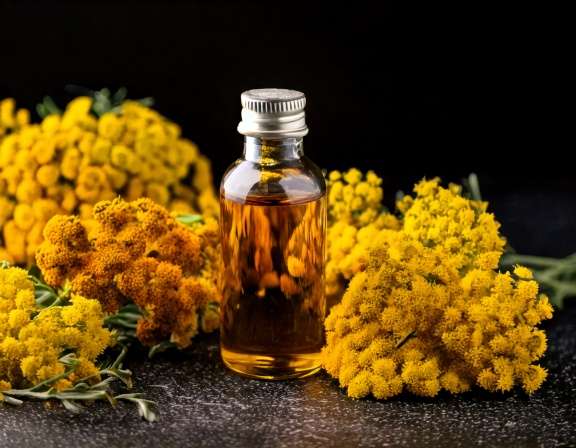
Helichrysum essential oil usually comes from the steam-distilled flowers and stems of Helichrysum italicum. This Mediterranean plant is also called immortelle or everlasting because its yellow flowers hold their color after drying. The oil has a warm, herbal scent with a slightly honeyed character.
For generations, people in Mediterranean regions have used helichrysum preparations for minor skin concerns and general comfort. Modern studies have examined extracts and essential oils for antioxidant, anti-inflammatory, antimicrobial, and wound-support activity. These findings help explain its popularity in natural skin care, but they don’t prove that a facial oil will erase scars, rebuild collagen, or transform tired skin overnight.
Large human trials focused on everyday facial use are still limited. Much of the available evidence involves laboratory testing, animal research, traditional use, or products that contain several ingredients. That distinction matters when a product label promises dramatic results.
At night, the oil can fit after cleansing because the skin is free from the day’s sweat, makeup, and sunscreen. A few diluted drops can add emollience, which helps skin feel softer and reduces the dry, tight sensation that often makes a complexion look worn out. A plain moisturizer provides water-based hydration, while a light oil helps slow moisture loss as you rest.
For a broader look at traditional uses and topical application, read about the benefits of helichrysum oil for skin.
What It Can and Cannot Do for a Dull Complexion
A well-diluted blend may leave skin feeling more comfortable, smooth, and moisturized. Those changes can make a dull complexion look fresher, especially when dryness causes rough texture or flat-looking skin.
However, helichrysum won’t erase fine lines overnight, cure acne, remove dark spots, or replace treatment for eczema, rosacea, wounds, or persistent irritation. It also can’t undo sun exposure or compensate for several nights of poor sleep.
Judge the routine by practical signs: less tightness, softer texture, and good comfort the next morning. Dramatic overnight changes usually point to marketing rather than reliable skin biology.
A Simple Three-Step Nighttime Skin Care Routine
Start with clean hands and a clean face. Use a mild, fragrance-free cleanser and lukewarm water. Avoid scrubbing, cleansing brushes, and very hot water, since friction and heat can leave tired-looking skin even more uncomfortable. Pat your face almost dry, but leave a little moisture behind.
Next, apply a light layer of plain moisturizer. Look for familiar barrier-supporting ingredients such as glycerin, ceramides, or squalane if your skin tolerates them. Give the moisturizer a moment to settle. The helichrysum blend goes last because facial oil helps seal in moisture rather than supplying much water on its own.
Place one or two drops of the diluted blend between clean fingertips. Warm it briefly, then press it over slightly damp skin. Use gentle upward strokes only where needed, and keep the product away from your eyes, eyelids, lips, and nostrils. You don’t need a glossy layer. Two or three drops for the whole face are usually enough.
Begin two or three nights per week. If your skin remains calm, you can use the blend more often. Jojoba oil feels light and suits many normal, combination, and oily skin types. Argan oil feels richer, so dry or mature-feeling skin may prefer it.
Recipe: A Basic Helichrysum and Jojoba Facial Blend
This is a sensible starter blend for normal, combination, or oily skin.
Ingredients
- 1 teaspoon jojoba oil
- 1 drop helichrysum essential oil
Add the jojoba oil to a small, clean dark glass bottle. Mix in the helichrysum essential oil, close the bottle, and roll it gently between your hands. After cleansing and moisturizing, apply two or three drops to clean, slightly damp skin.
Use the blend for external application only. Don’t apply it around your eyes. Store the bottle tightly closed in a cool place away from heat and sunlight.
Recipe: A Comforting Helichrysum and Argan Oil Blend
Argan oil offers a richer feel for skin that feels dry, tight, or mature.
Ingredients
- 1 teaspoon argan oil
- 1 to 2 drops helichrysum essential oil
Start with one drop, especially if your skin is sensitive or new to essential oils. Mix the ingredients in a small dark glass bottle, then apply two or three drops after your plain moisturizer. Press the blend over the moisturizer to help reduce moisture loss.
If your skin stays comfortable after several uses, you can consider the second drop in a fresh teaspoon of argan oil. Don’t describe or judge this blend as a wrinkle treatment. Its useful role is to add softness and comfort to a simple routine.
Recipe: A Calming Aloe and Helichrysum Night Mask
Use this single-use mask when skin feels warm or dehydrated, provided the skin isn’t broken, freshly burned, or actively irritated.
Ingredients
- 1 tablespoon plain, fragrance-free aloe vera gel
- 1 teaspoon jojoba oil
- 1 drop helichrysum essential oil
First, stir the helichrysum essential oil into the jojoba oil. Then mix that diluted oil into the aloe gel until the texture looks even. Apply a thin layer to clean skin and leave it on for 10 to 15 minutes.
Rinse gently with lukewarm water, pat dry, and apply a plain moisturizer. Discard leftovers rather than storing this water-based mixture. Without a preservative and proper testing, it can spoil or grow microbes.
How to Use Helichrysum Essential Oil Safely on Your Face
Essential oils are concentrated plant extracts. A small bottle may contain the aromatic compounds of a large amount of plant material, so more oil isn’t better for facial skin. Apply helichrysum only after dilution.
For a cautious starting point, use 1 drop per teaspoon, or 5 mL, of carrier oil. If your skin tolerates that amount, you can try 2 drops per teaspoon in a fresh blend. Keep the concentration low when using the oil on your face, especially near the eyes.
Patch test before applying a new blend. Place a small amount on the inner arm or behind the ear, then observe the area for 24 hours. Stop using it if you notice burning, swelling, a rash, worsening redness, or persistent itching. A pleasant scent doesn’t guarantee that your skin will accept the oil.
Keep helichrysum away from the eyes, eyelids, lips, nostrils, broken skin, fresh burns, and open wounds. Don’t combine several strong essential oils in one facial blend. More ingredients increase the chance of irritation and make it harder to identify the cause of a reaction.
Extra care is sensible during pregnancy, around children, and for anyone with asthma, fragrance sensitivity, or allergies to plants in the daisy family. People using prescription skin products should ask a clinician before adding an essential oil. A qualified aromatherapist can also help with dilution and ingredient selection, but essential oils shouldn’t replace a medical diagnosis or prescribed treatment.
If the oil enters your eye, don’t rinse with plain water alone, since oil and water don’t mix well. Use a suitable method recommended by a medical professional or contact poison control for immediate guidance.
How to Choose a Fresh, Skin-Suitable Oil
Look for the full botanical name, Helichrysum italicum, rather than a label that says only “helichrysum.” A clear batch or lot number, ingredient details, sourcing information, and a dark glass bottle add useful signs of supplier transparency.
A high price doesn’t prove quality. The oil should smell fresh and herbal, not harsh, stale, or rancid. Avoid products that promise instant anti-aging results, collagen repair, scar removal, or a cure for inflammation.
Keep the bottle tightly closed and store it away from sunlight, heat, and humidity. Follow the label’s storage directions, and don’t add essential oil to a water-based product unless a qualified formulator has created and preserved the formula properly.
When a Different Approach Is Better
Tired-looking skin can reflect dehydration, poor sleep, irritation, sun exposure, allergies, or an underlying skin condition. A basic fragrance-free moisturizer and daily broad-spectrum SPF 30 or higher usually matter more for long-term skin comfort and appearance.
Pause the blend if your skin becomes persistently red, itchy, painful, swollen, or flaky. Seek medical advice for an unexplained rash or symptoms that continue after you stop. Essential oil doesn’t belong on an open wound, an infection, or a serious skin concern.
Conclusion
Helichrysum essential oil can be a pleasant addition to a simple nighttime routine, but it isn’t a miracle cure for tired-looking skin. Begin with one diluted blend, patch test first, and give the routine a few weeks while you track comfort and softness.
Clean skin, a plain moisturizer, daily sunscreen, enough rest, and steady habits do more for a rested appearance than a crowded shelf of products. A careful drop of helichrysum can complement those basics when your skin welcomes it.
Stay Connected for More Natural Living Inspiration
If you enjoyed this post about herbal wellness and love discovering natural ways to refresh your home and wellness, don’t miss out on future recipes and clean-living tips! Subscribe to the blog for weekly DIYs, wellness inspiration, and herbal remedies delivered straight to your inbox.
Don’t forget to visit my Amazon storefront for the links to my favorite essential oils, herbal teas, and natural recipes. I also create YouTube ambiance videos for sleeping; a channel I created to help people who have trouble sleeping. The link to all social media content is here.
Thanks for coming by!
Leave a Reply