(DISCLAIMER: I am not a doctor, and you should consult your healthcare professional before starting any health regimen. Product links are commissioned and supports the blog)

When the day has been loud, busy, and full of small demands, a warm cardamom scent can help create a softer pause. Its aroma is sweet, fresh, and slightly peppery, with a clean quality that may feel calming without making you feel heavy or sleepy.
Cardamom essential oil can fit into breathing exercises, a quiet evening routine, or a short break between tasks. Aromatherapy may complement healthy stress habits, but it isn’t a treatment for anxiety disorders or other medical conditions. Below, you’ll find seven possible benefits, three simple recipes, and practical safety guidance.
Key Takeaways for Using Cardamom Essential Oil for Stress
- Cardamom may offer a calming yet uplifting aroma.
- Inhalation is the simplest starting method for beginners.
- Research looks promising, but human evidence remains limited.
- Essential oil is far more concentrated than cardamom spice.
- Safe dilution matters when you apply the oil to skin.
- Ongoing, severe, or disruptive stress symptoms deserve professional care.
How Cardamom Essential Oil May Support Stress Relief
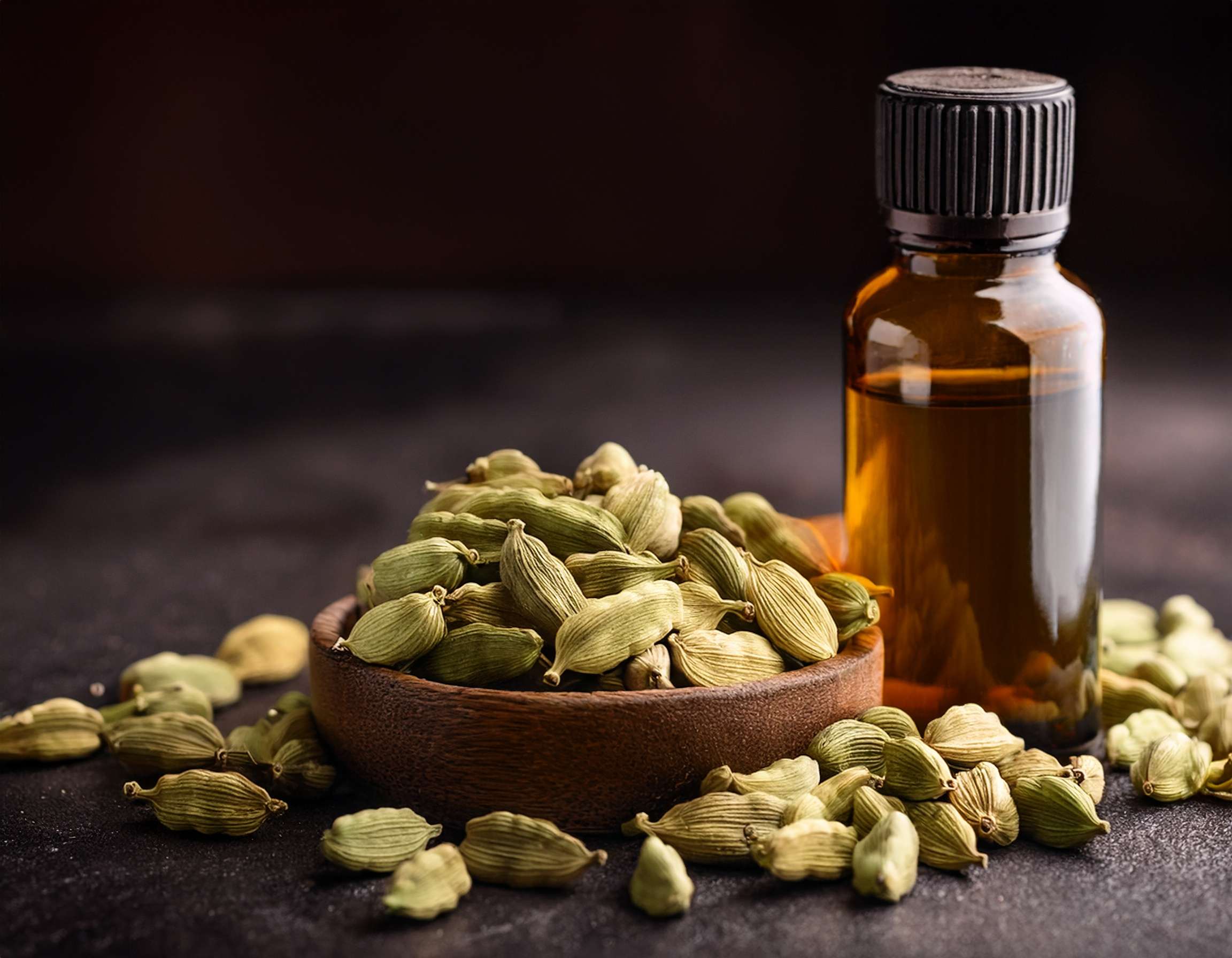
Cardamom essential oil usually comes from the seeds of Elettaria cardamomum, the green cardamom plant. Steam distillation captures volatile aromatic compounds, including 1,8-cineole, linalool, limonene, and alpha-terpinyl acetate. The balance can vary by plant source, extraction method, and product.
People have used cardamom in Ayurvedic, Unani, and other herbal traditions for digestion, breath freshness, and general comfort. Its scent also has a long history in food, tea, and personal fragrance. Those familiar associations can shape how relaxing the aroma feels to you.
Current research offers interesting clues, but it doesn’t prove that cardamom oil treats anxiety. Human studies on the oil remain small and limited. Some research involves university students, postoperative patients, or inhalation aromatherapy. Other findings come from laboratory work and rat models, where results cannot be transferred directly to people.
A pleasant sensory response is different from a proven medical effect. If the scent helps you slow your breathing or step away from mental overload, it can still have a useful place in a personal routine.
A calming scent can support a healthy stress habit, but it cannot replace care for persistent anxiety or severe distress.
Seven Cardamom Essential Oil Benefits Worth Exploring
1. A calmer mood without a heavy scent
Cardamom has a gentle warmth, yet its fresh, eucalyptus-like edge keeps it from feeling overly sweet. That balance may suit people who find heavier oils, such as patchouli or vetiver, too dense.
Early human aromatherapy research links cardamom inhalation with lower anxiety in certain settings. The evidence is limited, but the scent may help create a calmer emotional starting point before breathing exercises, stretching, or quiet reading.
2. A mild emotional lift
Stress can flatten your mood as the day wears on. A university-student study involving cardamom inhalation reported improved energy and fewer negative feelings, including tension and depressed mood.
That finding doesn’t mean cardamom works as an antidepressant. Instead, its bright spice aroma may offer a small emotional shift during a demanding afternoon. Try it during a short break when you want to feel steadier without becoming drowsy.
3. Support for clearer attention
Some people want to relax without losing mental sharpness. In the same student research, participants reported improved attention and memory after exposure to cardamom essential oil, even though their alertness decreased.
These findings are early and shouldn’t be treated as proof of a cognitive benefit. Still, cardamom may be a useful choice before calm work, journaling, or focused breathing. Use a small amount, since a strong scent can distract rather than help.
4. Less physical restlessness
Stress often appears in the body before you name it. You may tap your foot, shift in your chair, clench your hands, or keep checking the clock.
Preliminary research has associated cardamom inhalation with reduced sympathetic nervous activity, the part of the nervous system linked with heightened alertness. Animal studies also found less anxiety-like behavior after cardamom preparations. These results suggest a possible calming effect, but they don’t establish a reliable dose for people.
5. A more comfortable stress response
Anxiety can change the way you breathe, tighten your chest, and make a room feel harder to settle in. One human inhalation study connected cardamom with reduced anxiety and improved lung function.
That result needs more research before anyone can call cardamom a respiratory treatment. However, a pleasant aroma may make slow breathing feel easier during a stressful moment. Pair the scent with relaxed exhalations instead of taking repeated, forceful breaths.
6. Help creating a soothing evening ritual
A familiar scent can tell your mind that the busy part of the day is ending. Cardamom’s warm spice note may work well with dim lighting, a warm caffeine-free tea, gentle movement, or a few pages of a book.
Research in rats has examined cardamom oil and anxiety linked with sleep loss. That preclinical evidence is interesting, but it doesn’t prove that the oil improves human sleep. The practical benefit may come from the routine itself, especially when you use the same calming cues each evening.
For another nighttime aromatherapy approach, explore these calming essential oils for nighttime anxiety.
7. Gentle support for tension or digestive discomfort
Cardamom has traditional associations with digestion, and its aroma may feel comforting when stress brings a tight stomach or mild queasiness. In one postoperative study, cardamom aromatherapy gave women undergoing cesarean sections a sense of physical comfort and grounding while also addressing nausea.
These findings don’t support swallowing cardamom essential oil. Culinary cardamom, cardamom tea, and the concentrated essential oil are different products. Use aromatherapy for scent, and discuss recurring digestive symptoms with a healthcare professional.
Three Simple Ways to Use Cardamom Oil in a Stress-Support Routine
Inhalation is the best place to begin because it uses a small amount and avoids direct skin contact. Start with one drop, keep the room ventilated, and stop if the scent causes headache, coughing, nausea, or irritation.
1. One-drop tissue inhalation
INGREDIENTS
- 1 unscented tissue or cotton pad
- 1 drop cardamom essential oil
Place one drop on the tissue and let it sit for several seconds. Hold it a few inches from your nose and take two or three relaxed breaths. Put it down for a minute, then repeat if the aroma still feels comfortable. Discard the tissue after the session, and don’t place oil directly under your nose or on your lips.
This method works well during a short afternoon reset. A capped inhaler can travel more easily, and these portable essential oil inhaler recipes offer additional low-mess options.
2. A gentle diffuser blend
INGREDIENTS
- 2 drops cardamom essential oil
- 1 drop lavender essential oil
- Water according to your diffuser’s instructions
Add the oils after filling the diffuser to its recommended water line. Run it for 15 to 20 minutes in a ventilated room, then turn it off. Don’t leave a diffuser running overnight, and use fewer drops in a small bedroom or shared space.
The cardamom adds a bright, spicy note, while lavender softens the blend for an evening wind-down.
3. A low-dilution roller blend
INGREDIENTS
- 1 drop cardamom essential oil
- 1 drop lavender essential oil
- 10 mL jojoba or sweet almond oil
- 10 mL roller bottle
Add both essential oils to the bottle, then fill it with the carrier oil. Cap it and roll the bottle between your palms to mix. Apply a small amount to the inner forearm after performing a patch test. Store it in a cool, dark place and use it within three months.
This blend gives you a personal scent for a pause between meetings or errands. Keep it away from your eyes, face, broken skin, and children.
Safety, Quality, and What the Research Really Shows
Cardamom in food is not the same as concentrated essential oil. A few crushed pods in tea provide flavor at culinary levels. A single drop of essential oil contains a much more concentrated amount of aromatic material.
Choose a product that lists Elettaria cardamomum, the plant part used, the extraction method, and a batch or lot number. A reputable company should provide clear usage directions and avoid promising that the oil cures anxiety, depression, insomnia, or other conditions.
Never swallow cardamom essential oil unless a qualified healthcare professional with specific training in essential oil safety directs you to do so. Don’t add it to tea, water, or honey. Essential oils don’t disperse safely in water, so homemade drinks can expose your mouth and throat to concentrated oil.
For skin use, dilute the oil in a carrier oil and patch-test a small area first. Stop if redness, burning, itching, or swelling develops. Keep the bottle away from eyes, pets, children, heat, and open flames. Ask a healthcare professional before using it during pregnancy, around infants, or if you have asthma, fragrance sensitivity, or a chronic condition.
Research on cardamom oil remains promising but incomplete. Small human studies and animal research can guide questions, yet they don’t establish a medical treatment or a guaranteed response. Use the oil as a comfort measure alongside sleep, movement, social support, and evidence-based care.
A Warm, Grounded Way to Use Cardamom
Cardamom essential oil may support calmer feelings, a gentle emotional lift, clearer thinking, less restlessness, and a more comfortable response to everyday stress. It may also add warmth to an evening ritual and offer gentle comfort when tension affects your stomach or sense of ease.
Aroma is personal, so begin with one drop or a low-dilution recipe. Notice how your body responds, then adjust slowly. Cardamom can complement a thoughtful stress routine, but ongoing anxiety, panic, or severe symptoms need evidence-based professional care.
Stay Connected for More Natural Living Inspiration
If you enjoyed this post about herbal wellness and love discovering natural ways to refresh your home and wellness, don’t miss out on future recipes and clean-living tips! Subscribe to the blog for weekly DIYs, wellness inspiration, and herbal remedies delivered straight to your inbox.
Don’t forget to visit my Amazon storefront for the links to my favorite essential oils, herbal teas, and natural recipes. I also create YouTube ambiance videos for sleeping; a channel I created to help people who have trouble sleeping. The link to all social media content is here.
Thanks for coming by!


Leave a Reply